

B.C. government blasted for 'ultimate hypocrisy' over PFAS and sewage sludge
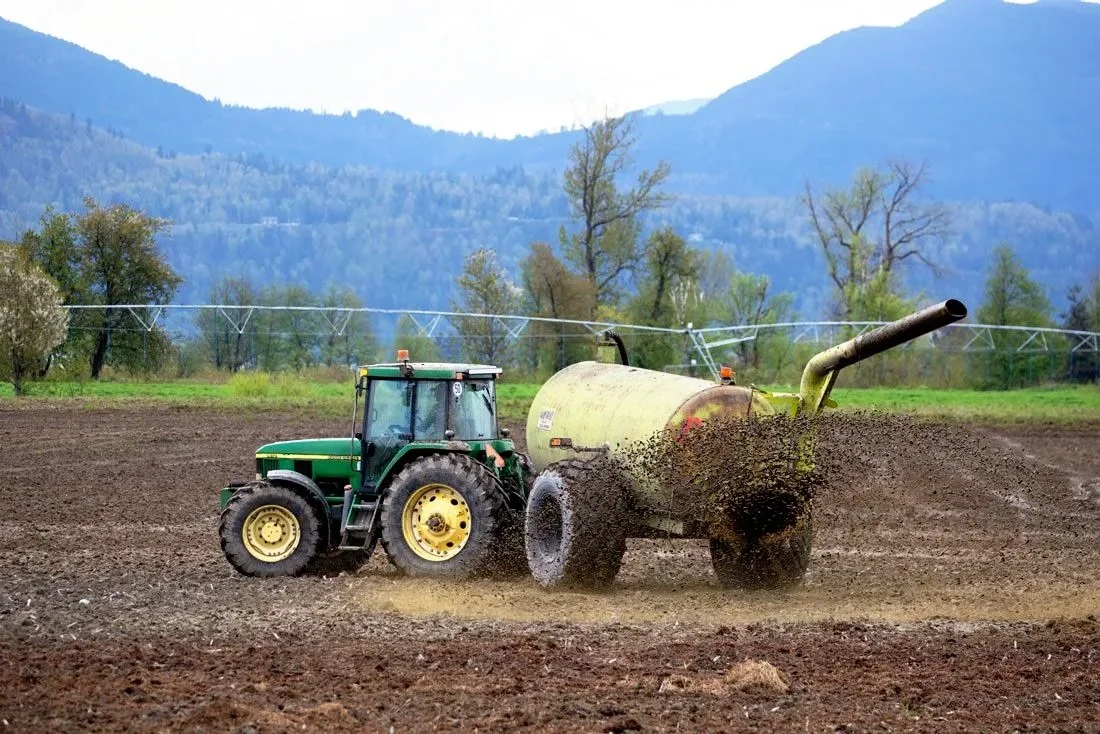
Advocates are calling on B.C. to ban the use of sewage sludge as a fertilizer on fields and forests because it can contaminate the soil with toxic chemicals like PFAS. Photo by Jesse Winter/National Observer
By Marc Fawcett-Atkinson
The B.C. government’s lawsuit over the health impact of so-called “forever chemicals” is now shining a questionable light on the province’s effort to also overturn one of Canada’s only bans on toxic sewage sludge applied to fields and forests.
"It is the ultimate hypocrisy," said Adam Olsen, an MLA for the B.C. Green party.
Sewage sludge, or biosolids, is the solid matter produced after sewage is dried and treated for bacterial contamination. While applying sewage waste to fields and forests is a cheap way to dispose of it, there is growing alarm the practice is polluting soils and drinking water with dangerous PFAS or per-fluoroakyll substances chemicals.
In the U.S. recently, Maine closed hundreds of farms because their soils were contaminated with PFAS from biosolids applied to fields decades ago. The crisis was large enough to push the state to ban outdoor application of biosolids entirely, joining countries like Germany.
PFAS are a class of thousands of chemicals used in everything from cosmetics to clothing to firefighting foam. They do not break down in nature, are now found in the blood of over 98 per cent of Canadians, and cause health problems like cancer and endocrine system disruptions.
All reporting produced as part of this project is free to the public and is not behind National Observer's paywall.
Climate Solutions
- September 2026 1
- August 2026 1
- July 2026 1
- March 2026 2
- February 2026 3
- January 2026 1
- December 2025 5
- November 2025 3
- October 2025 1
- September 2025 5
- August 2025 2
- November 2024 1
- July 2024 4
- June 2024 2
- January 2024 1
- December 2023 2
- August 2023 5
- June 2023 1
- May 2023 1
- April 2023 1
- March 2023 3
- February 2023 3
- December 2022 5
Youth Climate Action
- September 2026 1
- August 2026 1
- July 2026 3
- June 2026 3
- May 2026 2
- April 2026 3
- March 2026 5
- February 2026 3
- January 2026 2
- December 2025 4
- November 2025 1
- October 2025 5
- September 2025 3
- August 2025 2
- July 2025 3
- June 2025 1
- May 2025 2
- April 2025 3
- March 2025 2
- February 2025 2
- January 2025 2
- December 2024 1
- November 2024 1
- October 2024 2
- August 2024 1
- July 2024 4
- June 2024 1
- May 2024 2
- April 2024 4
- March 2024 1
- February 2024 3
- January 2024 4
- December 2023 1
- November 2023 3
- October 2023 3
- September 2023 1
- April 2023 1
- February 2023 2
- January 2023 2
- December 2022 1
- November 2022 4
- September 2022 3
- August 2022 3
- April 2022 1
Toxins in Canada
First Nations Forward
Sustainable Cities
Canada's Clean Economy
- August 2022 1
- December 2020 1
- November 2020 3
- September 2020 1
- August 2020 1
- June 2020 1
- May 2020 4
- February 2020 1
- December 2019 3
- November 2019 5
- October 2019 2
- August 2019 2
- July 2019 1
- June 2019 1
- May 2019 2
- April 2019 1
- March 2019 2
- February 2019 2
- December 2018 1
- February 2018 1
- November 2017 1