
How a Concordia business student helps kids build better communities
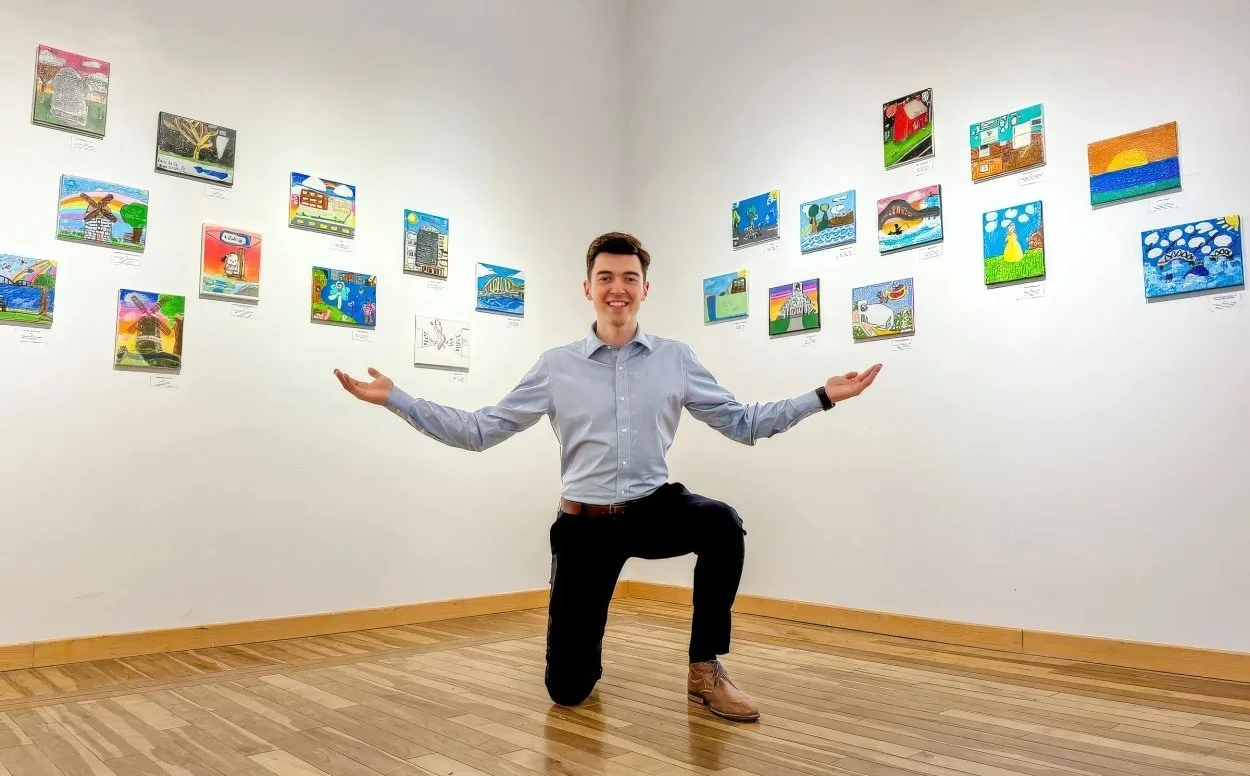
Michael Lecchino, president of the Conseil jeunesse de LaSalle, inside the Rêves en couleurs exhibition at the Centre culturel et communautaire Henri-Lemieux, LaSalle, Quebec. Photo submitted by Michael Lecchino
By Patricia Lane & Michael Lecchino
Michael Lecchino helps other young people see their individual climate and environmental protection actions as part of a larger whole. This business student at Concordia University in Montreal organized community-wide recycling of COVID-19 masks during the pandemic and cigarette butts clean-up in his neighbourhood parks. He hosted an art exhibition for 100 elementary school students who illustrated their dream for their home community of LaSalle with images of windmills, homes for all and better transit. He is creating guides to help university students persuade professors and business leaders to prioritize sustainability.
Tell us about your work.
I’m a founding member and president of our local youth council, the Conseil jeunesse de LaSalle (CJL). During the pandemic, we worked with the borough to place 10 bins in five municipal parks and mobilized over 100 residents to collect 1,168 masks for recycling. Youth council members, borough officials and our neighbours all saw that even when we are isolated, small, organized actions can protect shared spaces.
We noticed a lot of cigarette butts on the ground so we mapped hot spots and equipped volunteers to collect them. One butt contains over 2,000 toxic chemicals and can contaminate up to 500 litres of water as it breaks down. By collecting 5,844 butts, we prevented 2,922,000 litres from being polluted.
These projects were easy to teach and replicate with visible, measurable impacts and used simple equipment. For success, they depended on building strong partnerships between groups that don’t often work together, such as youth, government officials and neighbours. Participants can see that they have agency to care for their own streets and parks, and develop solutions that become a community-wide habit.
This reporting is produced with support from I-SEA’s Climate Solutions project and is not behind National Observer’s subscriber paywall. Readers are asked to create a FREE National Observer account to access the full article.
Climate Solutions
- September 2026 1
- August 2026 1
- July 2026 1
- March 2026 2
- February 2026 3
- January 2026 1
- December 2025 5
- November 2025 3
- October 2025 1
- September 2025 5
- August 2025 2
- November 2024 1
- July 2024 4
- June 2024 2
- January 2024 1
- December 2023 2
- August 2023 5
- June 2023 1
- May 2023 1
- April 2023 1
- March 2023 3
- February 2023 3
- December 2022 5
Youth Climate Action
- September 2026 2
- August 2026 1
- July 2026 3
- June 2026 3
- May 2026 2
- April 2026 3
- March 2026 5
- February 2026 3
- January 2026 2
- December 2025 4
- November 2025 1
- October 2025 5
- September 2025 3
- August 2025 2
- July 2025 3
- June 2025 1
- May 2025 2
- April 2025 3
- March 2025 2
- February 2025 2
- January 2025 2
- December 2024 1
- November 2024 1
- October 2024 2
- August 2024 1
- July 2024 4
- June 2024 1
- May 2024 2
- April 2024 4
- March 2024 1
- February 2024 3
- January 2024 4
- December 2023 1
- November 2023 3
- October 2023 3
- September 2023 1
- April 2023 1
- February 2023 2
- January 2023 2
- December 2022 1
- November 2022 4
- September 2022 3
- August 2022 3
- April 2022 1
Toxins in Canada
First Nations Forward
Sustainable Cities
Canada's Clean Economy
- August 2022 1
- December 2020 1
- November 2020 3
- September 2020 1
- August 2020 1
- June 2020 1
- May 2020 4
- February 2020 1
- December 2019 3
- November 2019 5
- October 2019 2
- August 2019 2
- July 2019 1
- June 2019 1
- May 2019 2
- April 2019 1
- March 2019 2
- February 2019 2
- December 2018 1
- February 2018 1
- November 2017 1