

Canadian athletes and fans want fossil fuel sponsors out of the Olympics, poll finds
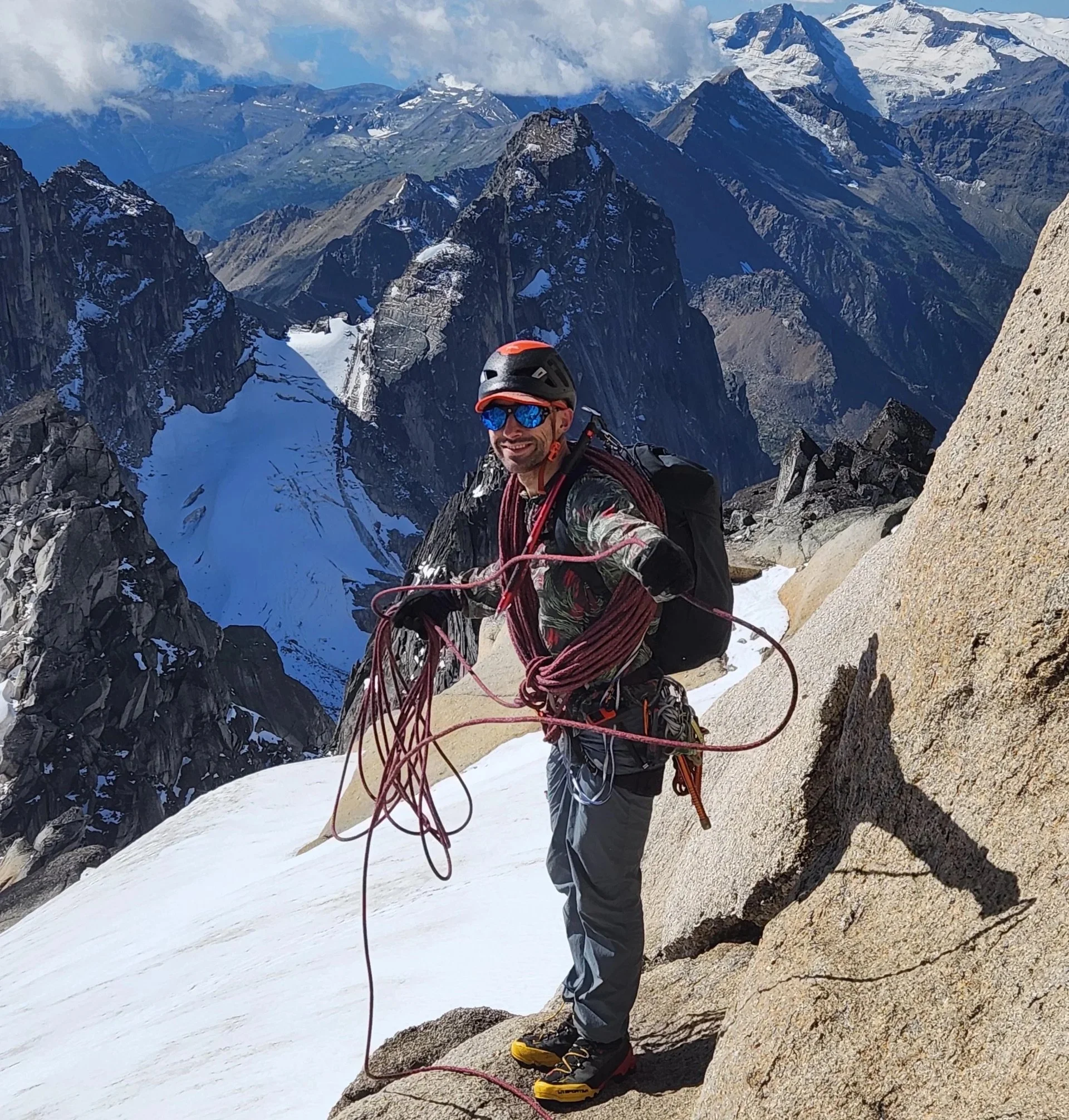
Ben Podborski, roped and geared, on a high alpine route in the Purcell Mountains of BC, where warming temperatures have made snow and ice conditions increasingly unreliable. Photo submitted.
By Abdul Matin Sarfraz
In Whistler, BC, Ben Podborski learned to ski on snow-covered mountains that once felt permanent. Glaciers stretched across the peaks and ice climbs — frozen climbing routes — formed early each winter and lasted for months. Today, Podborski says many of those places are gone or unreliable.
“I used to ski on glaciers here in the summer when I was a teenager,” Podborski told Canada’s National Observer. “That’s not possible anymore.”
Podborski is an alpinist and ice climber. He is also the son of Olympic medalist skier Steve Podborski, who took a public stand against tobacco sponsorship in sport in the 1980s. As the 2026 Winter Olympics approach, Podborski is now speaking out against fossil fuel advertising in winter sports.
Winter sports depend on cold temperatures and reliable snow, but fossil fuel pollution is driving warming that makes those conditions harder to find each year, he said.
As Canada’s teams, sponsored in part by Petro-Canada, prepare to head to Italy for the 2026 Winter Olympics in Milan–Cortina, Podborski is among thousands of Canadians surveyed who argue the Games should stop promoting oil and gas companies.
They say it is a clear contradiction to advertise fossil fuel brands at winter sports events while climate change is shrinking the very snow and ice those sports depend on.
“It’s not always that these venues or routes are completely unavailable,” Podborski said. “It’s the uncertainty. Do we have enough snow? Maybe this year we have too much snow. Next year, maybe we have none.”
This reporting is produced with support from I-SEA’s Climate Solutions project and is not behind National Observer’s subscriber paywall. Readers are asked to create a FREE National Observer account to access the full article.
Climate Solutions
- September 2026 1
- August 2026 1
- July 2026 1
- March 2026 2
- February 2026 3
- January 2026 1
- December 2025 5
- November 2025 3
- October 2025 1
- September 2025 5
- August 2025 2
- November 2024 1
- July 2024 4
- June 2024 2
- January 2024 1
- December 2023 2
- August 2023 5
- June 2023 1
- May 2023 1
- April 2023 1
- March 2023 3
- February 2023 3
- December 2022 5
Youth Climate Action
- September 2026 2
- August 2026 1
- July 2026 3
- June 2026 3
- May 2026 2
- April 2026 3
- March 2026 5
- February 2026 3
- January 2026 2
- December 2025 4
- November 2025 1
- October 2025 5
- September 2025 3
- August 2025 2
- July 2025 3
- June 2025 1
- May 2025 2
- April 2025 3
- March 2025 2
- February 2025 2
- January 2025 2
- December 2024 1
- November 2024 1
- October 2024 2
- August 2024 1
- July 2024 4
- June 2024 1
- May 2024 2
- April 2024 4
- March 2024 1
- February 2024 3
- January 2024 4
- December 2023 1
- November 2023 3
- October 2023 3
- September 2023 1
- April 2023 1
- February 2023 2
- January 2023 2
- December 2022 1
- November 2022 4
- September 2022 3
- August 2022 3
- April 2022 1
Toxins in Canada
First Nations Forward
Sustainable Cities
Canada's Clean Economy
- August 2022 1
- December 2020 1
- November 2020 3
- September 2020 1
- August 2020 1
- June 2020 1
- May 2020 4
- February 2020 1
- December 2019 3
- November 2019 5
- October 2019 2
- August 2019 2
- July 2019 1
- June 2019 1
- May 2019 2
- April 2019 1
- March 2019 2
- February 2019 2
- December 2018 1
- February 2018 1
- November 2017 1