

The power give and take of electric school buses
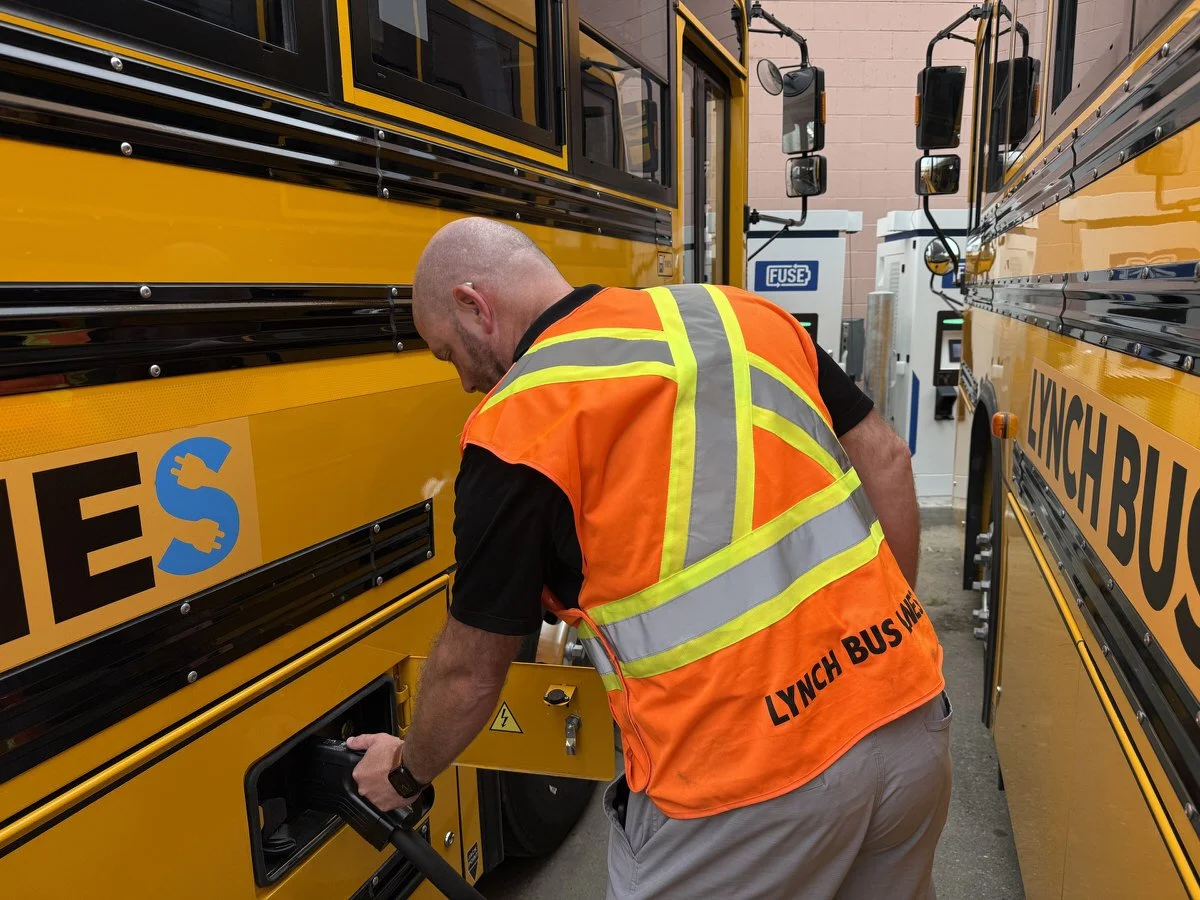
Two electric school buses in B.C. will soon serve double duty by carrying students by day and storing energy for the grid after hours. Photo courtesy of BC Hydro.
By Cloe Logan
In a first for a Canadian utility, electric school buses will serve a purpose larger than getting kids to and from school. BC Hydro is kicking off a project that will use the buses as battery grid storage once they’re charged — a move that aims to address rising energy needs.
The project is small in scale, but BC Hydro (which is the first utility in Canada to launch a field test of this kind) hopes it can be a successful pilot that can later be expanded. Electric Vehicles (EVs) contain batteries that are charged by plugging into the grid. However, those same batteries can be used as storage for excess electricity. The buses use specific chargers that allow bidirectional energy flow — they charge up when electricity is cheaper and then can release it to the grid during peak demand, before being recharged for driving.
Being able to draw from battery-powered EVs helps stabilize grids fed by intermittent sources of power such as wind and solar, which grew by 35 per cent and 92 per cent between 2019 and 2024 respectively. Wind blows and sun shines, but for the energy to flow more reliably to the grid, it needs to be stored in batteries. Governments are now pushing for large battery storage projects to make renewables more viable. However, EVs present another opportunity to strengthen the grid, explains Kari Montrichard of BC Hydro, since they are “mobile batteries that move around versus a stationary battery,” which allows more flexibility.
All reporting produced as part of this project is free to the public and is not behind National Observer's paywall.
Climate Solutions
- September 2026 1
- August 2026 1
- July 2026 1
- March 2026 2
- February 2026 3
- January 2026 1
- December 2025 5
- November 2025 3
- October 2025 1
- September 2025 5
- August 2025 2
- November 2024 1
- July 2024 4
- June 2024 2
- January 2024 1
- December 2023 2
- August 2023 5
- June 2023 1
- May 2023 1
- April 2023 1
- March 2023 3
- February 2023 3
- December 2022 5
Youth Climate Action
- September 2026 2
- August 2026 1
- July 2026 3
- June 2026 3
- May 2026 2
- April 2026 3
- March 2026 5
- February 2026 3
- January 2026 2
- December 2025 4
- November 2025 1
- October 2025 5
- September 2025 3
- August 2025 2
- July 2025 3
- June 2025 1
- May 2025 2
- April 2025 3
- March 2025 2
- February 2025 2
- January 2025 2
- December 2024 1
- November 2024 1
- October 2024 2
- August 2024 1
- July 2024 4
- June 2024 1
- May 2024 2
- April 2024 4
- March 2024 1
- February 2024 3
- January 2024 4
- December 2023 1
- November 2023 3
- October 2023 3
- September 2023 1
- April 2023 1
- February 2023 2
- January 2023 2
- December 2022 1
- November 2022 4
- September 2022 3
- August 2022 3
- April 2022 1
Toxins in Canada
First Nations Forward
Sustainable Cities
Canada's Clean Economy
- August 2022 1
- December 2020 1
- November 2020 3
- September 2020 1
- August 2020 1
- June 2020 1
- May 2020 4
- February 2020 1
- December 2019 3
- November 2019 5
- October 2019 2
- August 2019 2
- July 2019 1
- June 2019 1
- May 2019 2
- April 2019 1
- March 2019 2
- February 2019 2
- December 2018 1
- February 2018 1
- November 2017 1