

Solar power in the Arctic? Iqaluit is giving it a go
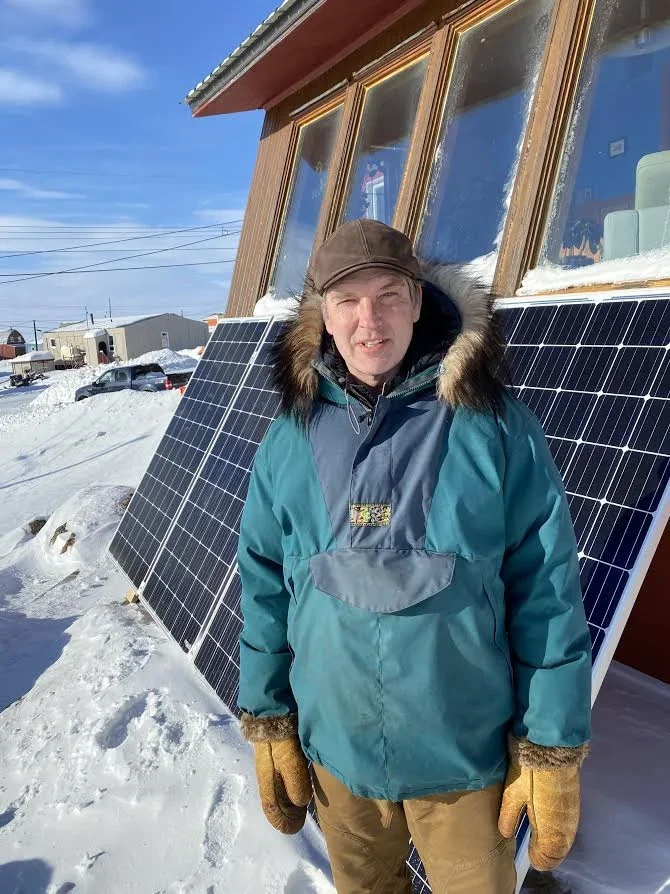
Paul Crowley stands next to the solar panels on his house in Iqaluit. Photo by Lynn Peplinski
By Charles Mandel
unavut’s capital city would seem a less than auspicious place for solar power, given that on Dec. 21 — the shortest day of the year — there is only three and a half hours of daylight.
But in the summer of 2020, installers attached 12 solar panels to Iqaluit lawyer Paul Crowley’s 1,800-square-foot house. Then, in November, his renewable energy system came online, and he connected to the Nunavut power grid.
During the darkest days of winter, Crowley’s home draws substantial power from the grid. However, even in those months, his solar panels manage to supplement his energy requirements.
“The monitoring that we have on the panels shows me that even in the short days of December, January, when it was sunny — and of course that doesn’t happen every day — we were getting sometimes over half of our power from the panels, and those are in the shortest days,” Crowley noted. By mid-February, he says his home was receiving “upward of 70 per cent” of its power from the solar panels.
This reporting is produced with support from I-SEA’s Climate Solutions project and is not behind National Observer’s subscriber paywall. Readers are asked to create a FREE National Observer account to access the full article.