

Young leader harnesses AI to help streamline sustainability disclosure
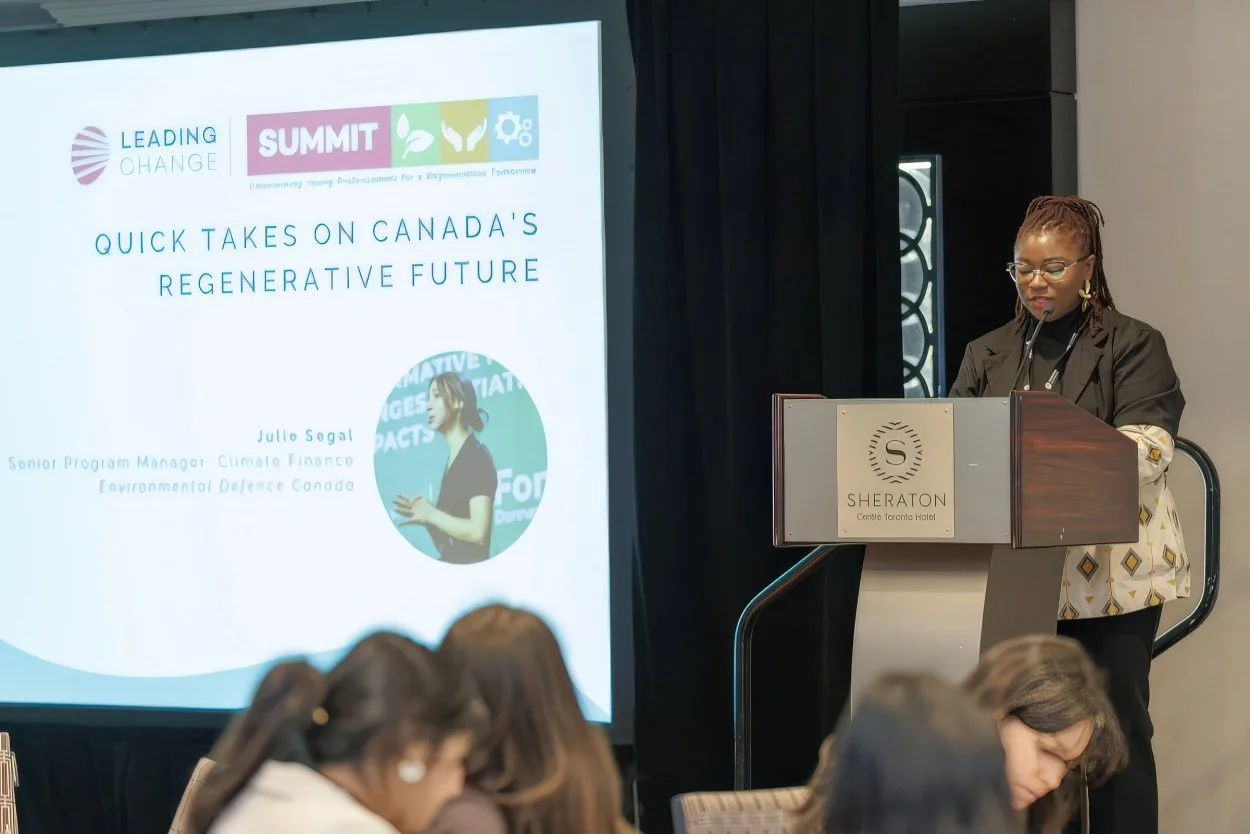
Fatou Dieng speaks to youth participants at the Leading Change summit. Photo courtesy: Leading Change
By Patricia Lane & Fatou Dieng
Fatou Dieng combines sharp technical expertise with a deep commitment to ensuring young people have a seat at decision-making tables as we work toward a net-zero, socially just economy. This 29-year-old Montrealer, originally from Senegal, was named to Corporate Knights’ 30 Under 30: Canada's youth sustainability leaders of 2025 for her work with Manifest Climate, where she helps train artificial intelligence to support organizations to better understand and align with regulator preferences for climate action disclosure, as well as with Leading Change Canada, where she empowers youth to participate meaningfully in decision-making.
Tell us about your projects.
At Manifest Climate, I support organizations in integrating climate disclosure frameworks, meeting regulatory requirements and building robust climate action strategies and am helping use AI for sustainability. In 2025, we provided a major financial regulator with in-depth analyses of corporate disclosures, enabling it to assess which companies had board-level awareness, credible plans and robust systems for measuring and evaluating progress. This allowed the regulator to fine-tune its approach and make its oversight more effective. Companies can use this data to compare themselves with peers and identify both strengths and areas for improvement.
As a volunteer, I also lead youth engagement at Leading Change Canada, where I work to empower emerging sustainability leaders. A particular focus is ensuring youth from the African diaspora understand how much the sustainability movement benefits from their perspectives and contributions. Young people are deeply worried about the future and having our voices heard and respected makes a real difference.
READ MORE Free to read — no sign-in required.
Youth Climate Action
- September 2026 1
- August 2026 1
- July 2026 3
- June 2026 3
- May 2026 2
- April 2026 3
- March 2026 5
- February 2026 3
- January 2026 2
- December 2025 4
- November 2025 1
- October 2025 5
- September 2025 3
- August 2025 2
- July 2025 3
- June 2025 1
- May 2025 2
- April 2025 3
- March 2025 2
- February 2025 2
- January 2025 2
- December 2024 1
- November 2024 1
- October 2024 2
- August 2024 1
- July 2024 4
- June 2024 1
- May 2024 2
- April 2024 4
- March 2024 1
- February 2024 3
- January 2024 4
- December 2023 1
- November 2023 3
- October 2023 3
- September 2023 1
- April 2023 1
- February 2023 2
- January 2023 2
- December 2022 1
- November 2022 4
- September 2022 3
- August 2022 3
- April 2022 1