
Montreal master's student connects young people with the ocean
Valerie Muñoz converses with two of the participants at an in-person youth summit at McGill University in Montreal. Photo courtesy: Ysabel Owusu
By Patricia Lane & Valerie Muñoz
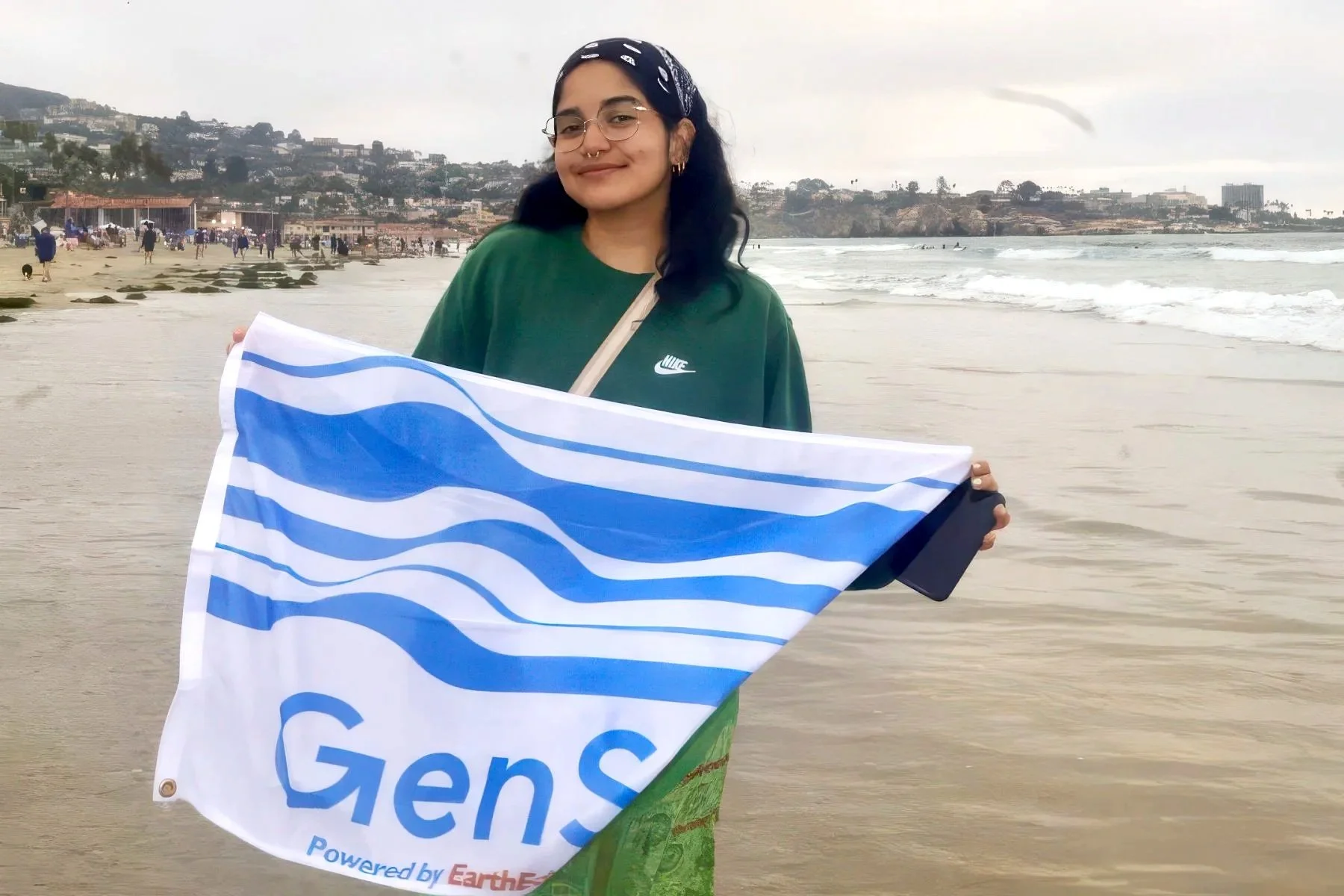
Valerie Muñoz brings the ocean to land. As a member of EarthEcho International’s Youth Leadership Council, this 22-year-old master's degree student at McGill University designs collaborative campaigns to mobilize young ocean advocates worldwide through GenSea.
Tell us about a recent project.
In January 2026, I facilitated two youth summits for GenSea aimed at supporting participants to connect with the ocean. The team I worked with for the 100-person virtual session helped people from all over the world learn about their already existing relationship with the sea. Our guest speaker, Phillipe Cousteau — grandson of the famous Jacques Cousteau and founder of EarthEcho International — helped us see that oceans give us so much. They feed us and store carbon and generate as much of the oxygen we breathe as do the rainforests. Helping people who do not live near the sea understand its crucial role in our lives is important to motivate us to protect it.
The 12 participants in the in-person session here at McGill spent time learning about the St. Lawrence River’s ecosystems. Although Montrealers do not think of themselves as ocean people, we are directly connected to it by the river.
Despite really important policy changes such as Montreal’s elimination of single-use plastics in 2023, plastic pollution continues unabated and threatens the health of the ocean. We reflected on the reality that policy change, while important, will not deliver the results we need on its own. We must have widespread behavioural change too. This means changing our relationship with plastics. Participants were asked to record a short video about what they learned to increase the number of voices making themselves heard on social media and other platforms. We know people are more likely to change their own behaviour if we see others like us doing it first.
READ MORE Free to read — no sign-in required.
Youth Climate Action
- September 2026 2
- August 2026 1
- July 2026 3
- June 2026 3
- May 2026 2
- April 2026 3
- March 2026 5
- February 2026 3
- January 2026 2
- December 2025 4
- November 2025 1
- October 2025 5
- September 2025 3
- August 2025 2
- July 2025 3
- June 2025 1
- May 2025 2
- April 2025 3
- March 2025 2
- February 2025 2
- January 2025 2
- December 2024 1
- November 2024 1
- October 2024 2
- August 2024 1
- July 2024 4
- June 2024 1
- May 2024 2
- April 2024 4
- March 2024 1
- February 2024 3
- January 2024 4
- December 2023 1
- November 2023 3
- October 2023 3
- September 2023 1
- April 2023 1
- February 2023 2
- January 2023 2
- December 2022 1
- November 2022 4
- September 2022 3
- August 2022 3
- April 2022 1