

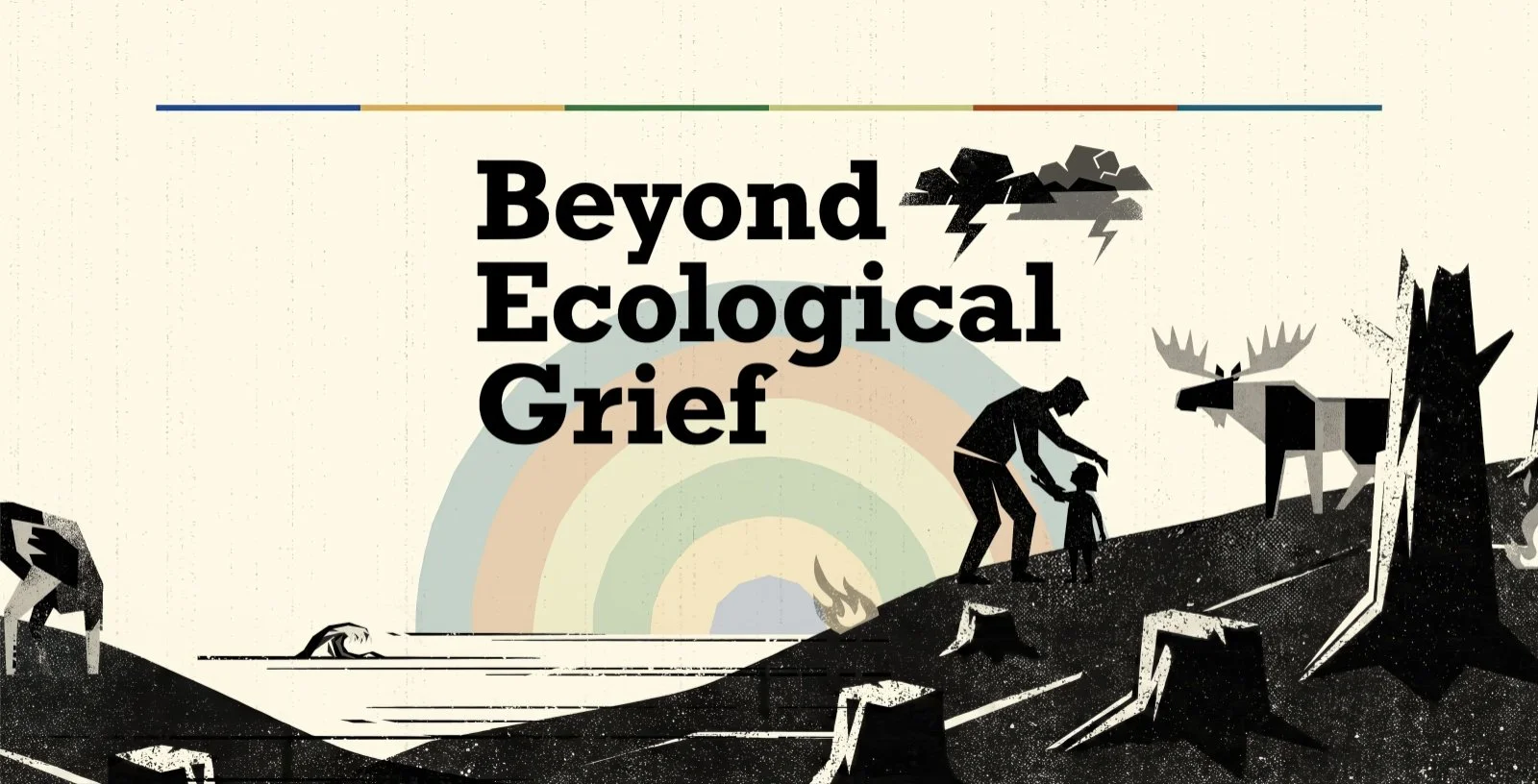
Beyond Ecological Grief Podcast comes to you courtesy of Canada’s National Observer.
Beyond Ecological Grief is a six-part podcast, hosted by Amy Romer, investigating the emotional realities of living through a planetary health crisis. Guided by the five stages of grief, each episode follows a personal story — from scientists to land defenders and youth — whose ties to land and history shape how they respond to a rapidly changing world. Intimate interviews and in-depth reporting trace how eco-grief shows up as denial, anger, bargaining, depression, and acceptance. When the place that shaped you is threatened — or destroyed — what does it take to keep going and take action?
Beyond Ecological Grief: Trailer
Episode 1 - Grief in the Valley
As the Site C reservoir floods the Peace River Valley in northern B.C., farmers and members of Blueberry River First Nations witness their land, wildlife, and ancestral territory disappear beneath an unfamiliar lake.
Ken Boon and Georgina Yahey trace decades of political struggle, resistance, and eventual loss, alongside the emotional weight of watching their home vanish in real time.
Meanwhile, climate psychologist Britt Wray introduces the idea of ecological grief — the mourning that comes from losing ecosystems, species, and places we depend on — and questions whether traditional models of grief can capture this kind of collective, ongoing loss.
Episode 2 - Climate of Denial
Most people accept that climate change is real. So why is it still so difficult to fully confront what it means?
In this episode, host Amy Romer explores the first stage of grief: denial.
Climate psychologist Britt Wray explains how denial can function as a coping mechanism, while climate scientist Simon Donner examines why some climate messages resonate and others fall flat. Together, they explore the gap between understanding the climate crisis and acting on it.
The episode also follows a landmark youth-led climate lawsuit in Ontario, where activists Sophia Mathur and Beze Gray are challenging the provincial government’s climate targets in court. As politicians delay action and fossil fuel interests continue to shape public opinion, the case raises a larger question: can the legal system succeed where politics has failed?
Episode 3 -Warrior for Moose
As a young man caught between life in rural and urban Manitoba, Dean Robinson struggled with anger, disconnection, and questions about where he belonged. Reconnecting with the land through hunting helped him rediscover his culture, identity, and purpose.
In this episode, Dean’s personal journey unfolds alongside a troubling reality: moose populations across parts of Manitoba are declining due to a human-caused pressures. And for many Indigenous communities, the disappearance of moose threatens cultural practices and relationships with the land that have endured for generations.
Through conversations with Dean, wildlife biologist Ally Menzies, and climate psychologist Britt Wray, the episode explores anger as a response to ecological loss, and how that anger can be transformed into stewardship, and hope for future generations.
Episode 4 - For Our Kids
Should we still have children in a climate crisis?
As wildfires, floods and other climate disasters become more common, a growing number of people are questioning what kind of future awaits the next generation. Some are choosing to have fewer children. Others are reconsidering parenthood altogether.
Through conversations with parents from the climate advocacy network For Our Kids and climate psychologist Britt Wray, host Amy Romer examines the bargains parents make with themselves in the face of uncertainty — that if they do enough, fight hard enough, or prepare their children enough, they might protect them from what’s to come.
From climate awakenings and difficult family decisions to grassroots organizing and political victories, these stories reveal how parents are navigating fear, hope and responsibility in a rapidly changing world.
Episode 5 - From the Ashes
When the village of Lytton, B.C., was destroyed by wildfire during the record-breaking 2021 heat dome, the world watched residents flee the flames. But for poet and café owner Meghan Fandrich, the hardest part came after the headlines faded.
In this episode, Meghan shares the long journey through ecological grief, from trauma and isolation to the depths of depression. Through poetry written in the aftermath of the fire, she reflects on losing her business, her community, and the future she had imagined.
Alongside Meghan's story, climate psychologist Britt Wray explains why depression can be a natural response to loss, while traditional firekeeper Joe Gilchrist explores how generations of Indigenous cultural burning once helped protect landscapes like Lytton — and what restoring those practices could mean in a warming world.
Episode 6 - Tipping Points
In the final episode of Beyond Ecological Grief, marine biologist Nicola Smith reflects on what it means to confront the reality of climate change, and why accepting that reality is essential to limiting the severity of a future that is already unfolding.
Alongside Nicola's story, climate psychologist Britt Wray explores the final stage of grief: acceptance. Together, they ask what hope really means in an era of climate change—and why grief, when shared, can become a source of courage rather than paralysis.