
Conservationists ask: Will Ontarians spend $7 a year to save 88 species?
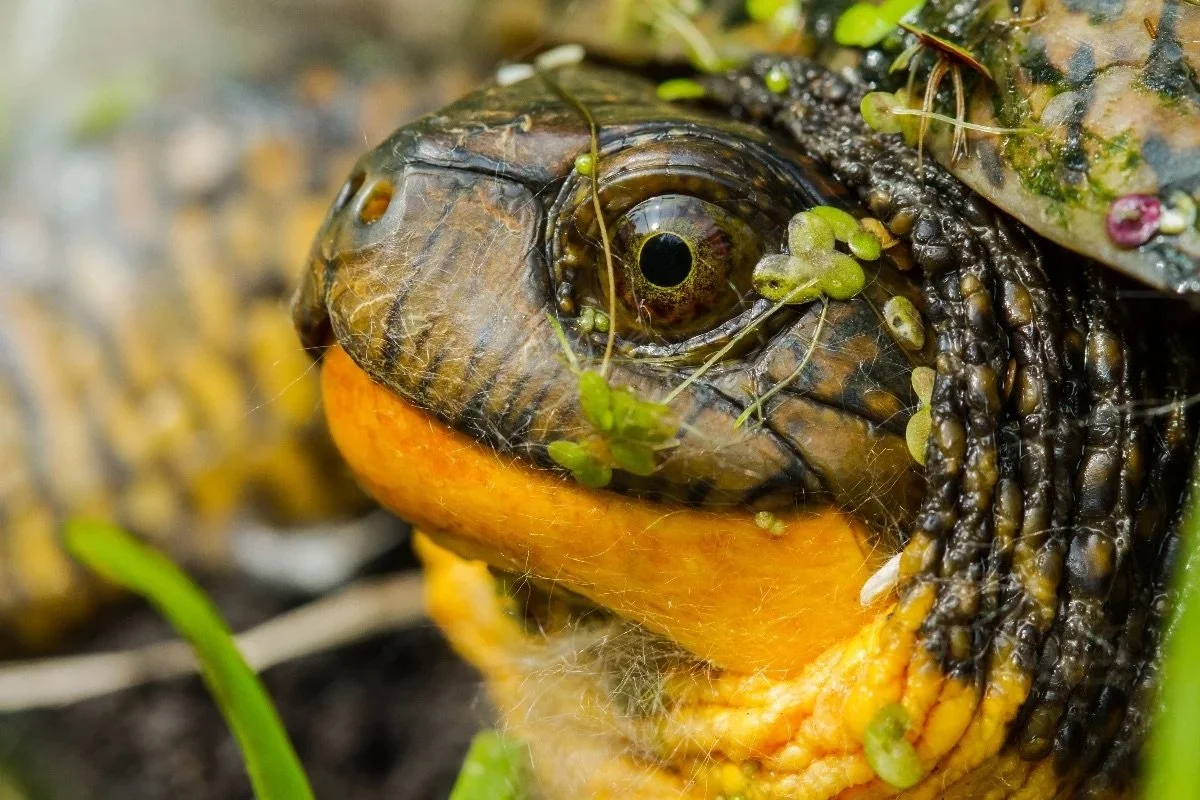
The Blanding’s turtle is among the species at risk in southern Ontario. Photo by Dantesattic / iStock
By Jennifer Cole
Emily Giles spends a lot of time thinking about the Blanding’s turtle, a freshwater reptile that spends its days in the wetlands of the Lake Simcoe-Rideau ecoregion of southern Ontario. As senior manager for science, knowledge and innovation for the World Wildlife Fund (WWF) Canada, it’s not just the turtles on her mind: it’s how the region is under increasing pressure from a growing population.
“I don’t think development has to come at the cost of conservation, nor should it,” Giles says.
Yet it has. Stretching from Lake Huron in the west to the Ottawa River in the east, the ecoregion is one of Canada’s most densely populated and includes cities such as Barrie, Peterborough, Ottawa and Kingston. Here, intense industrial and urban development has polluted waterways, increased greenhouse gas emissions and threatened habitat for at-risk species.
A report released last fall by WWF Canada and the University of British Columbia (UBC) warned that without immediate and targeted conservation action, 130 of the 133 species currently at risk in the ecoregion could be locally extinct by 2050.
Giles, along with conservationists from UBC’s Martin Conservation Decisions Lab, used a decision-making tool known as Priority Threat Management (PTM) to map out a solution that could prevent almost all the extinctions.
Based on Ontario’s current population of about 16 million people, if every Ontario resident contributed $7 annually, at least 75 per cent of the species currently under threat in the ecoregion could recover.
This reporting is produced with support from I-SEA’s Climate Solutions project and is not behind National Observer’s subscriber paywall. Readers are asked to create a FREE National Observer account to access the full article.
Climate Solutions
- September 2026 1
- August 2026 1
- July 2026 1
- March 2026 2
- February 2026 3
- January 2026 1
- December 2025 5
- November 2025 3
- October 2025 1
- September 2025 5
- August 2025 2
- November 2024 1
- July 2024 4
- June 2024 2
- January 2024 1
- December 2023 2
- August 2023 5
- June 2023 1
- May 2023 1
- April 2023 1
- March 2023 3
- February 2023 3
- December 2022 5
Youth Climate Action
- September 2026 2
- August 2026 1
- July 2026 3
- June 2026 3
- May 2026 2
- April 2026 3
- March 2026 5
- February 2026 3
- January 2026 2
- December 2025 4
- November 2025 1
- October 2025 5
- September 2025 3
- August 2025 2
- July 2025 3
- June 2025 1
- May 2025 2
- April 2025 3
- March 2025 2
- February 2025 2
- January 2025 2
- December 2024 1
- November 2024 1
- October 2024 2
- August 2024 1
- July 2024 4
- June 2024 1
- May 2024 2
- April 2024 4
- March 2024 1
- February 2024 3
- January 2024 4
- December 2023 1
- November 2023 3
- October 2023 3
- September 2023 1
- April 2023 1
- February 2023 2
- January 2023 2
- December 2022 1
- November 2022 4
- September 2022 3
- August 2022 3
- April 2022 1
Toxins in Canada
First Nations Forward
Sustainable Cities
Canada's Clean Economy
- August 2022 1
- December 2020 1
- November 2020 3
- September 2020 1
- August 2020 1
- June 2020 1
- May 2020 4
- February 2020 1
- December 2019 3
- November 2019 5
- October 2019 2
- August 2019 2
- July 2019 1
- June 2019 1
- May 2019 2
- April 2019 1
- March 2019 2
- February 2019 2
- December 2018 1
- February 2018 1
- November 2017 1