

Meet the director at the heart of Carleton's sustainability efforts
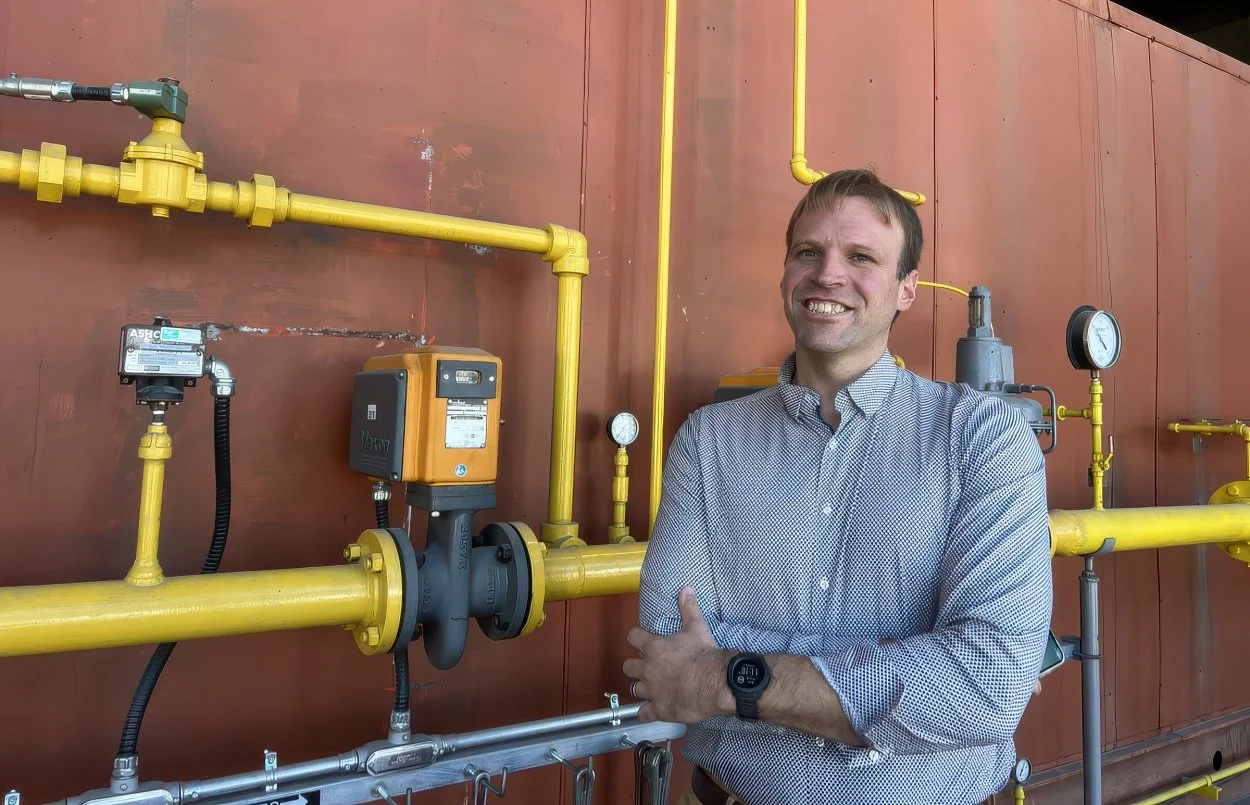
As Carleton's director of energy and sustainability, Scott Macdonald embodies the goals of his department: he bikes to work, powers his own home with solar panels and teaches his two young children the importance of energy saving. Photo by Kaitlin Gruehl / Canada’s National Observer.
By Kaitlin Gruehl
Scott Macdonald is not just leading Carleton University’s sustainability efforts; he is living them.
As the director of energy and sustainability at the school, Macdonald bikes to work, powers his home with solar panels and teaches his two young children the importance of energy saving. At Carleton University, he is driving projects to make the campus energy efficient and climate-conscious.
With 12 years at Carleton — and five of them in his current role — Macdonald oversees campus-related sustainability initiatives, from the central heating plant to tiny forests and pollinator gardens. With the help of his leadership, Carleton has become the first Canadian university to join the Government of Canada’s Net Zero Challenge, which encourages businesses to work toward net-zero emissions by 2050.
Collaboration is something Macdonald says has been key. He and his team work alongside others at the university, such as those in athletics, campus housing and faculty, to ensure needs are met. Fostering these relationships has driven success for his initiatives by integrating them into the university’s operations. “At the end of the day, we have to put students, research and teaching first,” he said.
As an engineer, Macdonald often sees this success in numbers. For example, he cites the university’s improved electrical efficiency, noting that it is using the same amount of energy today as in 1990, “even though we’ve grown 25 per cent in buildings.”
“We’re always looking to see how we can improve and how we can reduce our consumption,” he adds.
This reporting is produced with support from I-SEA’s Climate Solutions project and is not behind National Observer’s subscriber paywall. Readers are asked to create a FREE National Observer account to access the full article.
Climate Solutions
- September 2026 1
- August 2026 1
- July 2026 1
- March 2026 2
- February 2026 3
- January 2026 1
- December 2025 5
- November 2025 3
- October 2025 1
- September 2025 5
- August 2025 2
- November 2024 1
- July 2024 4
- June 2024 2
- January 2024 1
- December 2023 2
- August 2023 5
- June 2023 1
- May 2023 1
- April 2023 1
- March 2023 3
- February 2023 3
- December 2022 5
Youth Climate Action
- September 2026 2
- August 2026 1
- July 2026 3
- June 2026 3
- May 2026 2
- April 2026 3
- March 2026 5
- February 2026 3
- January 2026 2
- December 2025 4
- November 2025 1
- October 2025 5
- September 2025 3
- August 2025 2
- July 2025 3
- June 2025 1
- May 2025 2
- April 2025 3
- March 2025 2
- February 2025 2
- January 2025 2
- December 2024 1
- November 2024 1
- October 2024 2
- August 2024 1
- July 2024 4
- June 2024 1
- May 2024 2
- April 2024 4
- March 2024 1
- February 2024 3
- January 2024 4
- December 2023 1
- November 2023 3
- October 2023 3
- September 2023 1
- April 2023 1
- February 2023 2
- January 2023 2
- December 2022 1
- November 2022 4
- September 2022 3
- August 2022 3
- April 2022 1
Toxins in Canada
First Nations Forward
Sustainable Cities
Canada's Clean Economy
- August 2022 1
- December 2020 1
- November 2020 3
- September 2020 1
- August 2020 1
- June 2020 1
- May 2020 4
- February 2020 1
- December 2019 3
- November 2019 5
- October 2019 2
- August 2019 2
- July 2019 1
- June 2019 1
- May 2019 2
- April 2019 1
- March 2019 2
- February 2019 2
- December 2018 1
- February 2018 1
- November 2017 1