

One data centre or one million homes? Mapping Ontario's proposed hyperscaler boom
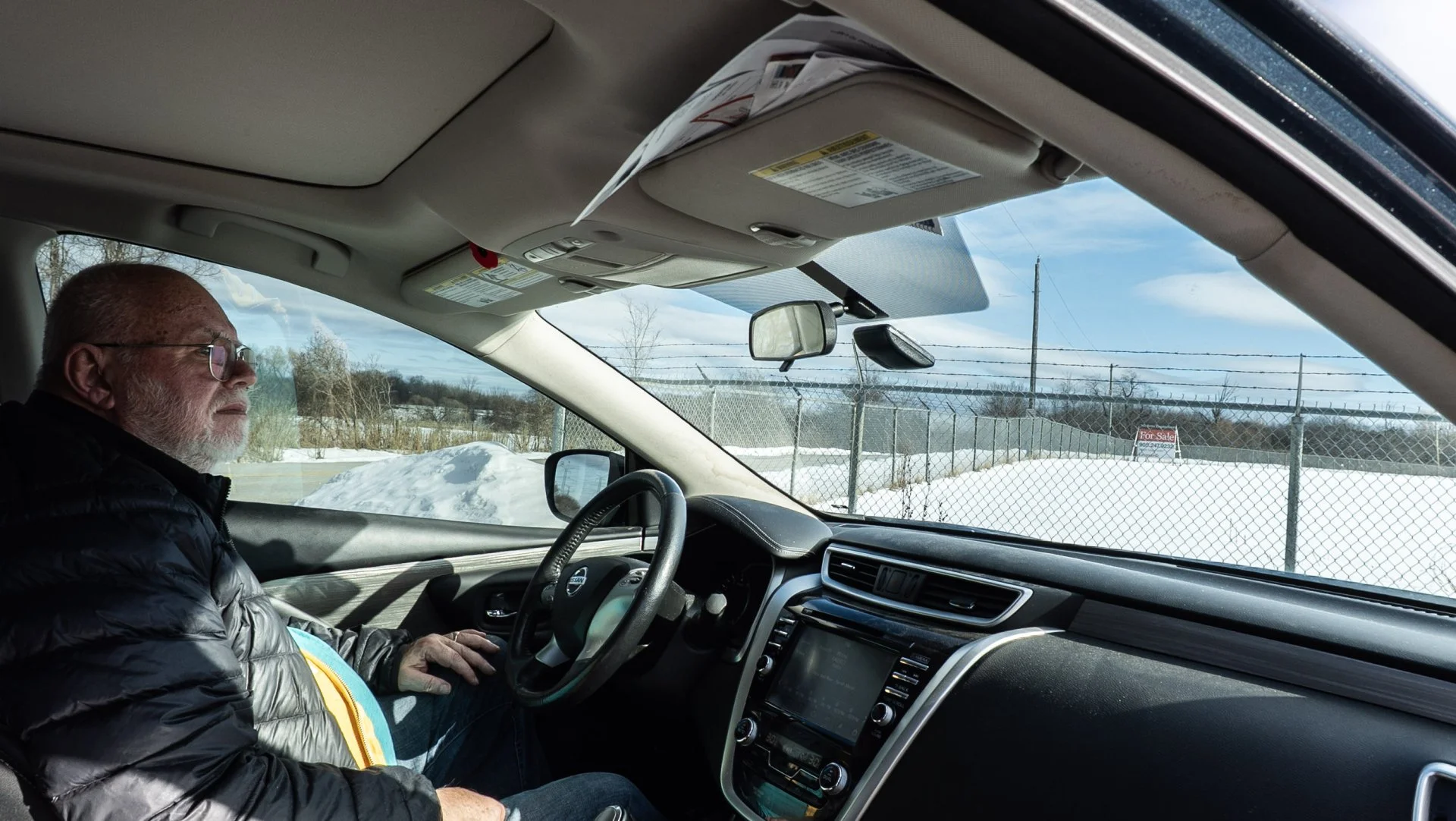
Ian Thompson in his car in Milton at the location of a site being advertised for data centre development. Photo by Cloe Logan / Canada's National Observer
By Cloe Logan & Rory White
Ian Thompson wakes up every morning to feed his chickens; though he lives just an hour outside of Toronto, he holds onto these more rural aspects of life: chickens, gardening, no gridlock traffic.
But the town he remembers from decades ago is quickly disappearing. Now one of the fastest-growing municipalities in Canada, his town of Milton is being eyed for something beyond housing development: two proposed data centres that together would require a city’s worth of electricity, the equivalent of a million homes.
Though the projects would put pressure on the grid, potentially raise electricity rates and require an undisclosed amount of water, Thompson — part of the environmental group Sustainable Milton — was unaware of them. This lack of transparency has left Thompson and other local residents trying to investigate, mirroring the experiences of other communities in Ontario. Even in Toronto, an Etobicoke city councillor wasn’t aware of a planned data centre until he was contacted by the CBC.
Because data centres don’t need to go through a provincial consultation process, there is no one place to see what projects could be coming down the pipe. Unlike in Alberta, Ontario’s energy regulator, the Independent Electricity System Operator (IESO), does not publish the locations of data centres vying for electricity. When asked, it refused to provide a comprehensive list of projects, citing “commercial sensitivities.”
So, Canada’s National Observer found and drew from multiple sources to put together a map of planned data centres in Ontario, and found at least 15 projects with a combined capacity of 2,202 MW currently proposed — equating to the annual electricity draw of around two million homes — for data centres alone.
The map reveals that small towns in Ontario are in the crosshairs of a global race to build infrastructure for artificial intelligence. The AI boom is driving demand for far larger, hyperscale data centres that would dwarf the nearly 100 data centres currently in the province, some of which draw just 1 MW. And this is only the beginning: the province says there is interest in developing as much as 6,500MW worth of new data centres in the province — about 30 per cent of Ontario’s current peak electricity load — and that they are expecting data centres to make up 13 per cent of new electricity demand by 2035.
This reporting is produced with support from I-SEA’s Climate Solutions project and is not behind National Observer’s subscriber paywall. Readers are asked to create a FREE National Observer account to access the full article.