
Saskatchewan student explores industry and Indigenous land restoration concepts
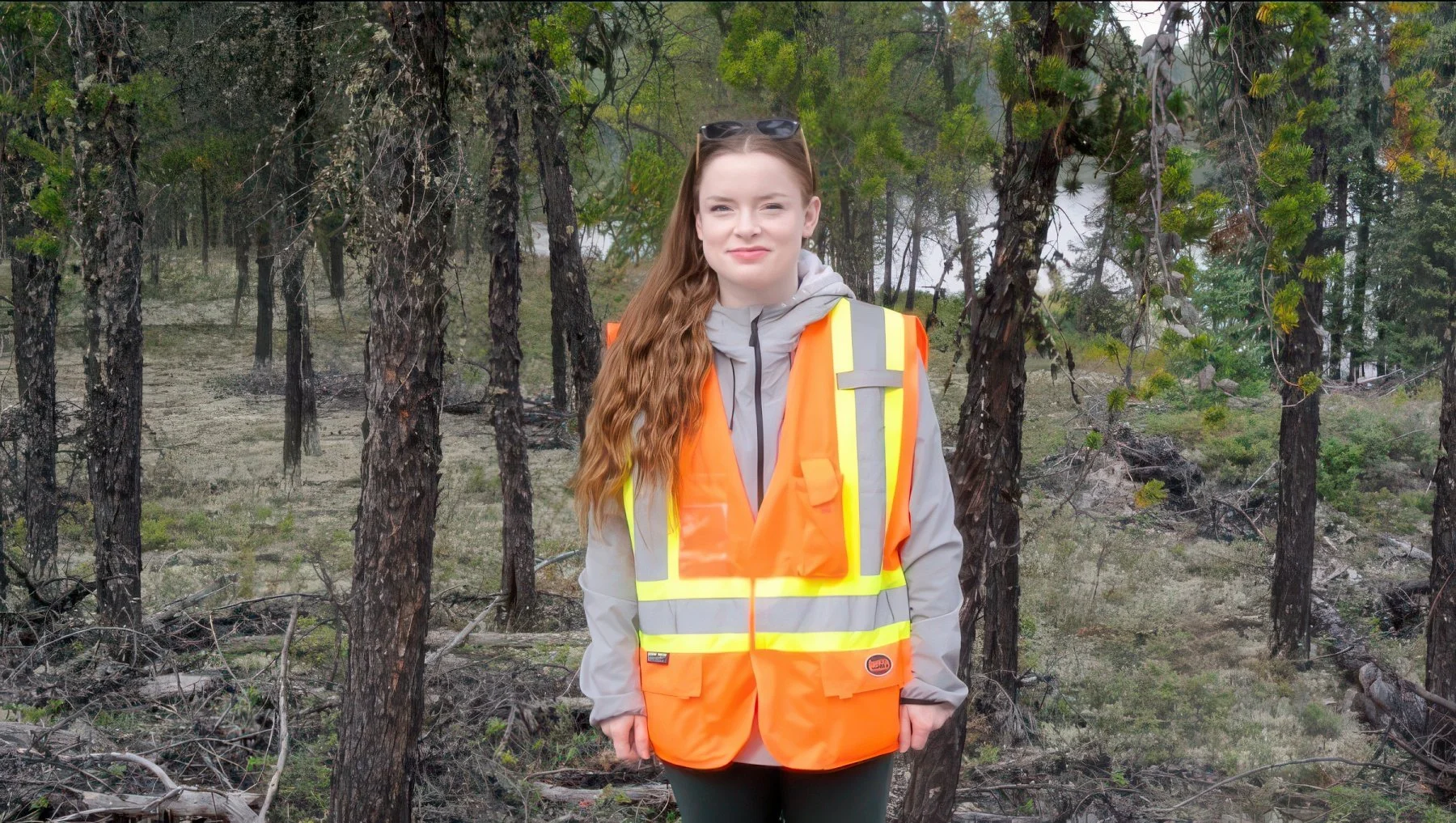
Mackenzie Burnett visits the site of an ecological restoration field trial in northern Saskatchewan. Photo courtesy: Mackenzie Burnett
By Patricia Lane & Mackenzie Burnett
Mackenzie Burnett explores the overlap between extractive industry and Indigenous concepts of land restoration. She also draws people into conversations about climate solutions in her work with Climate Justice Saskatoon and the Saskatoon Climate Hub.
Tell us about your work.
My University of Saskatchewan master’s thesis discusses the results of interviews with 17 Indigenous and industry restoration practitioners in Northern British Columbia and the Yukon. I’m exploring how they view restoration and how future Indigenous and industry partners can better collaborate to restore industrial sites.
What are some of your findings?
While some industry participants thought about restoration in terms of meeting regulatory requirements, both groups shared the goals of returning the land to its pre-disturbance state and having Indigenous rights-holders be able to meaningfully practise their treaty rights.
Some of the Indigenous rights holders I spoke with also defined successful restoration as being able to trust the land again. In other words, they seek to establish from both Western science and their own ways of knowing that the land and water are free of contaminants and the plants and animals that grew and thrived before have returned and are healthy.
When done well, the collaboration required to heal the damaged land appeared to strengthen relationships between people, including some industry and Indigenous partners, and between people and the land.
The collaborations have many benefits. In Canada, we are all dependent on land that is either unceded or part of a treaty. As the need for resources grows, it is in everyone’s interests that we learn to do a better job of making the land whole after we disturb it. Research shows restoration is more effective when done in collaboration with local and Indigenous people. Indigenous people should be partners and leaders in this work. The outcomes will be more successful, and the health and wellbeing of communities will improve.
READ MORE Free to read — no sign-in required.
Youth Climate Action
- September 2026 2
- August 2026 1
- July 2026 3
- June 2026 3
- May 2026 2
- April 2026 3
- March 2026 5
- February 2026 3
- January 2026 2
- December 2025 4
- November 2025 1
- October 2025 5
- September 2025 3
- August 2025 2
- July 2025 3
- June 2025 1
- May 2025 2
- April 2025 3
- March 2025 2
- February 2025 2
- January 2025 2
- December 2024 1
- November 2024 1
- October 2024 2
- August 2024 1
- July 2024 4
- June 2024 1
- May 2024 2
- April 2024 4
- March 2024 1
- February 2024 3
- January 2024 4
- December 2023 1
- November 2023 3
- October 2023 3
- September 2023 1
- April 2023 1
- February 2023 2
- January 2023 2
- December 2022 1
- November 2022 4
- September 2022 3
- August 2022 3
- April 2022 1