

Young wildlife biologist shows communities how 'conservation begins with connection'
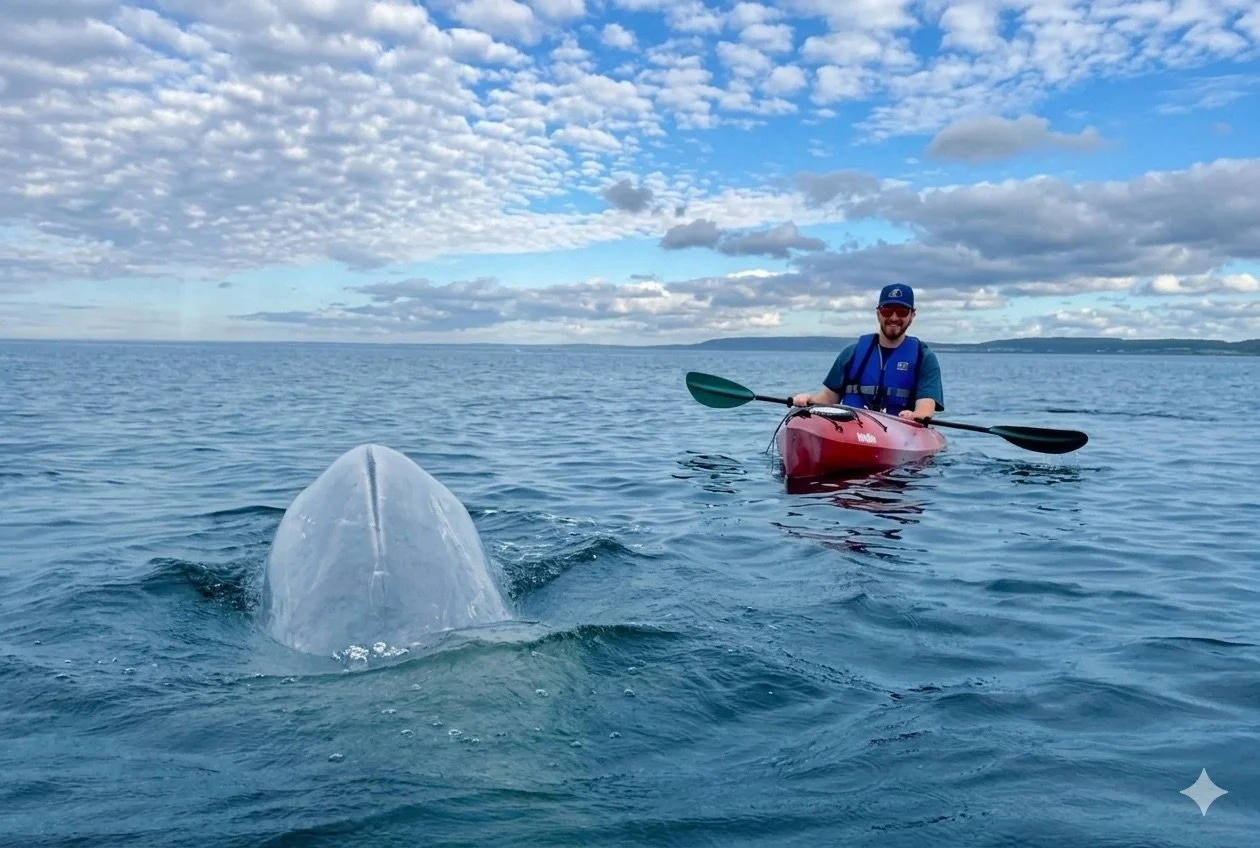
Jacob Gerard kayaks with beluga whales on the Churchill River in Manitoba. Photo by: Curtis Hull
By Patricia Lane & Jacob Gerard
Jacob Gerard helps communities protect the wild creatures they love. The 23-year-old wildlife biologist, storyteller and photographer from Ajax, Ontario, has created a beautiful web-based story map called Neighbours of the North, exploring Churchill, Man.’s relationship with polar bears and beluga whales. The resource is available to the northern community as it navigates its growing importance to the Canadian economy. Closer to home, Jacob equips schoolchildren in his region with tools to discover and connect with the wildlife in their local wetlands.
Tell us about your work.
After spending three summers as a research assistant in Churchill, I produced a resource reflecting the community’s passionate connection to polar bears, belugas and the environment that sustains them. I wanted to respect the balancing act required between protecting wildlife and recognizing the economic benefits they bring through tourism.
Churchill faces real pressures. Climate change, potential industrial development and over-tourism may pose serious risks to wildlife and sustainable ecotourism. The ice-free season is lengthening, forcing polar bears ashore earlier and keeping them there longer as freeze-up dates grow later each year. Human-polar bear interactions are increasing as bears spend more time on land than ever before.
Polar bears often wander into town — nearly silent, masters of disguise. Churchill maintains an active alert system and residents teach visitors that these animals, the world’s largest land carnivores, are worthy of deep respect.
Through relationships with researchers, scientists, tourism operators and community members, I was able to document local efforts to achieve balance. One example is that while polar bears are allowed to approach tundra buggies without being deterred, there is a strict rule that humans do not approach a polar bear closer than 100 metres. It is widely respected because the community supports it.
The story map has been shared locally with community members. I hope it can contribute to ongoing discussions in Churchill about expanding its port while protecting the wildlife that defines it.
READ MORE Free to read — no sign-in required.
Youth Climate Action
- September 2026 2
- August 2026 1
- July 2026 3
- June 2026 3
- May 2026 2
- April 2026 3
- March 2026 5
- February 2026 3
- January 2026 2
- December 2025 4
- November 2025 1
- October 2025 5
- September 2025 3
- August 2025 2
- July 2025 3
- June 2025 1
- May 2025 2
- April 2025 3
- March 2025 2
- February 2025 2
- January 2025 2
- December 2024 1
- November 2024 1
- October 2024 2
- August 2024 1
- July 2024 4
- June 2024 1
- May 2024 2
- April 2024 4
- March 2024 1
- February 2024 3
- January 2024 4
- December 2023 1
- November 2023 3
- October 2023 3
- September 2023 1
- April 2023 1
- February 2023 2
- January 2023 2
- December 2022 1
- November 2022 4
- September 2022 3
- August 2022 3
- April 2022 1