

Toronto student helps immigrant youth connect to the land and their heritage
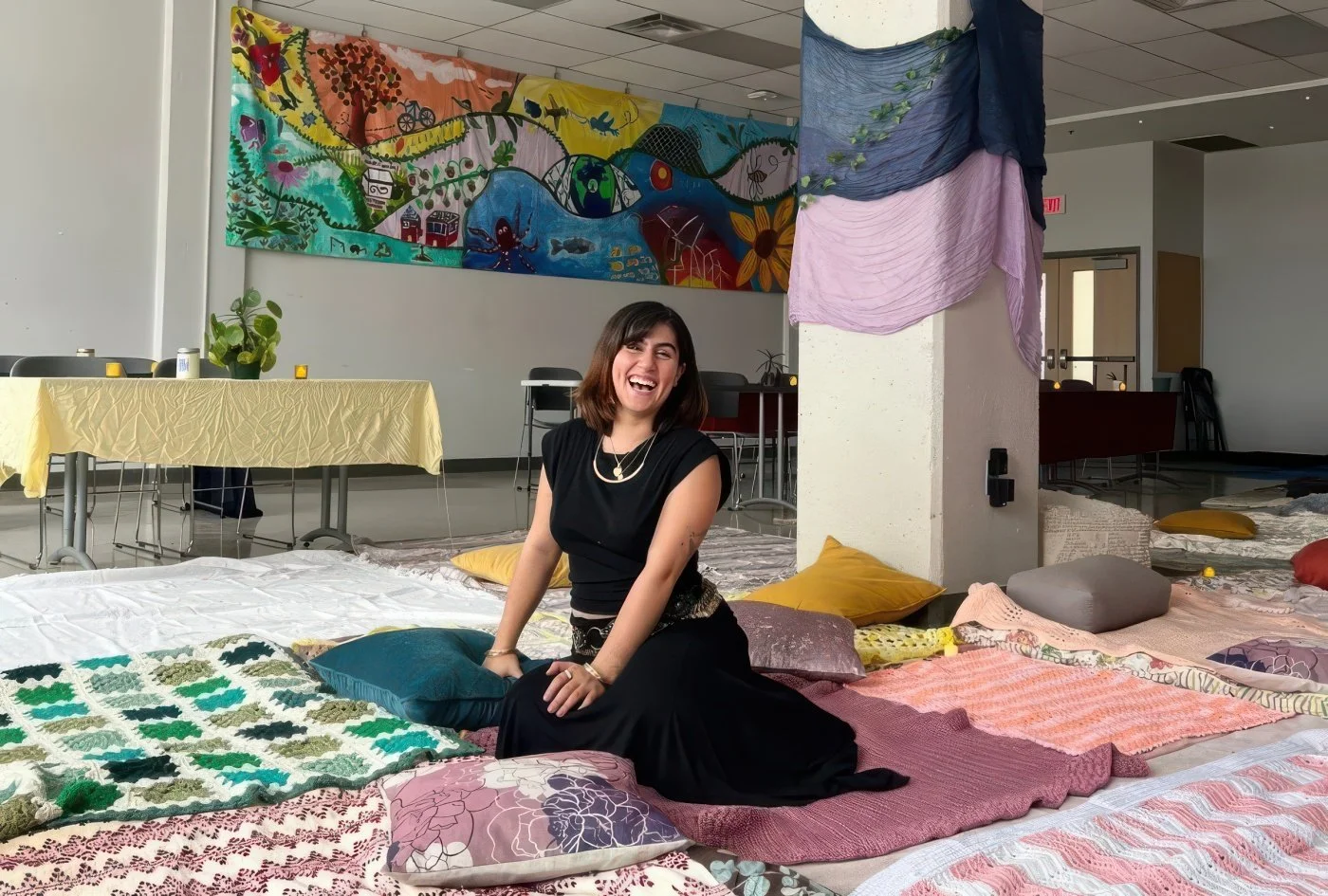
Melina Ghasem-Asad in a conversation pit where the “Gathering of Green Threads: Nurturing Resilience Through Love, Resilience, and Justice” conference was hosted. Photo by: Paniz Rahmannejadi
By Patricia Lane & Melina Ghasem-Asad
Melina Ghasem-Asad helps her fellow immigrant students get their hands in Canadian soil so they can explore the relationship their ancestors had to the land. She is a Starfish Canada 2026 Climate75 Fellow.
Tell us about your projects.
I worked at York University’s Maloca Community Gardens, which centres Indigenous traditional ecological knowledge to teach sustainable regenerative organic farming. As president of the student club Many Green Hands, I drew students in with workshops and seminars. I also designed and facilitated a six-week certificate program for urban farmers. I ran programs aimed at encouraging racialized and queer people to explore how a relationship to the soil might increase their own resilience. Now, I continue to work in the garden as part of my masters thesis research exploring racialized, diasporic relationships to the land as practices of memory, resistance and belonging.
The Indigenous knowledge keepers at the garden shared their teachings and encouraged us to explore our own cultures’ ancient connection to the land. For example, they would offer us tea made from native plants like hyssop and corn silk, while supporting us to be curious about teas from our homelands. I asked my mother and grandmother and learned about the importance of teas made with roses and saffron in my own culture.
When the Indigenous teacher opened the spring gardening season with the Thanksgiving address, it took a long time because they named everything in the ecosystem from microbes to insects and birds in the skyworld. I was spellbound. Their stories helped me experience how everything is connected. I realized the way we germinate or plant each seed and how we care for the soil has a direct impact on the health of the land. If we care for the land, it can care for us. How did my own ancestors relate to their soil and water and the beings that thrived there? How did they adapt to changes in the environment and the climate? How did they make amends for human error and apply those lessons?
I was inspired to talk with my family about the ways they welcomed the new growing season. I am beginning to understand the symbolism behind the objects we revere at our spring festival Nowruz, like garlic and eggs. I am becoming a knowledge keeper of my own culture.
READ MORE Free to read — no sign-in required.
Youth Climate Action
- September 2026 1
- August 2026 1
- July 2026 3
- June 2026 3
- May 2026 2
- April 2026 3
- March 2026 5
- February 2026 3
- January 2026 2
- December 2025 4
- November 2025 1
- October 2025 5
- September 2025 3
- August 2025 2
- July 2025 3
- June 2025 1
- May 2025 2
- April 2025 3
- March 2025 2
- February 2025 2
- January 2025 2
- December 2024 1
- November 2024 1
- October 2024 2
- August 2024 1
- July 2024 4
- June 2024 1
- May 2024 2
- April 2024 4
- March 2024 1
- February 2024 3
- January 2024 4
- December 2023 1
- November 2023 3
- October 2023 3
- September 2023 1
- April 2023 1
- February 2023 2
- January 2023 2
- December 2022 1
- November 2022 4
- September 2022 3
- August 2022 3
- April 2022 1