
Vancouver sound artist turns music, stories and science into blueprint for living with nature
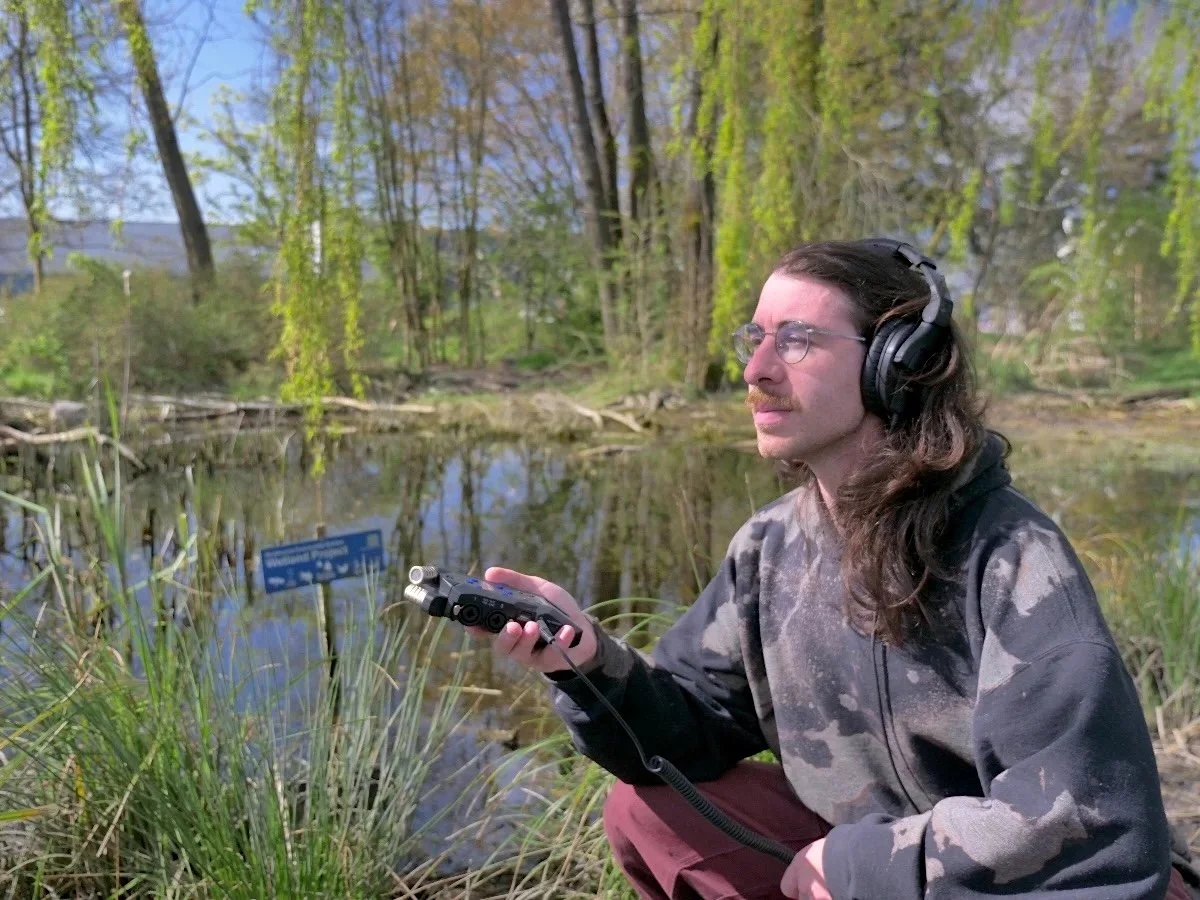
Mendel Skulski field recording at the Strathcona Community Gardens Wetland. Photo submitted by: Mendel Skulski
By Patricia Lane & Mendel Skulski
Mendel Skulski applies the art of conversation in service of a livable future. As a sound artist, this young Vancouverite co-produces Future Ecologies, a podcast exploring our relationships with the natural world, layered with stories, science, music and soundscapes. As a community organizer with the False Creek Friends Society, Mendel also works to interconnect the neighbours of the unique inland sea at the heart of the city. Both projects offer the same public invitation: to imagine and take an active part in co-creating a healthier world.
Tell us about Future Ecologies Podcast.
In each episode of the podcast, we aim to take you on a sonic journey that will forever change how you see the natural world. Many people are raised thinking of nature as something passive and separate from their lives as human beings. We tell stories that challenge that assumption. Often they feature Indigenous world views, where active participation is key to thriving ecosystems and thriving people. Millennia of Indigenous stewardship have left countless traces on the landscape, but you have to learn to notice them. One example: sea gardens are places where humans modified the intertidal zone to support abundant food, medicine and biodiversity.
My co-producer Adam Huggins and I constantly experiment with the format, exploring documentary, audio collage and more. Episodes might have one guest voice or dozens, but we always use music and sound design to tell half the story. To quote a recent guest, Margo Robbins, we “take it from a mind-knowing thing to a heart-felt thing.”
Tell us about your work at False Creek.
I got introduced to the False Creek Friends Society (FCFS) when I was invited to produce their new video podcast, Waterbodies. I learned about the issues facing False Creek, and met people who care deeply about it.
I began to understand that False Creek has enormous transformative potential. It is central to Vancouver’s identity yet falls short across many dimensions, including climate resiliency, biodiversity, water quality, civic amenities, safety and aesthetics. It doesn’t live out its potential to support our public physical or cultural health. While the planet may feel out of control, False Creek seems like the perfect scale for people to consider their role in change for the better.
READ MORE Free to read — no sign-in required.
Youth Climate Action
- July 2026 2
- June 2026 3
- May 2026 2
- April 2026 3
- March 2026 5
- February 2026 3
- January 2026 2
- December 2025 4
- November 2025 1
- October 2025 5
- September 2025 3
- August 2025 2
- July 2025 3
- June 2025 1
- May 2025 2
- April 2025 3
- March 2025 2
- February 2025 2
- January 2025 2
- December 2024 1
- November 2024 1
- October 2024 2
- August 2024 1
- July 2024 4
- June 2024 1
- May 2024 2
- April 2024 4
- March 2024 1
- February 2024 3
- January 2024 4
- December 2023 1
- November 2023 3
- October 2023 3
- September 2023 1
- April 2023 1
- February 2023 2
- January 2023 2
- December 2022 1
- November 2022 4
- September 2022 3
- August 2022 3
- April 2022 1