

The gardening hack that could slow forest fires
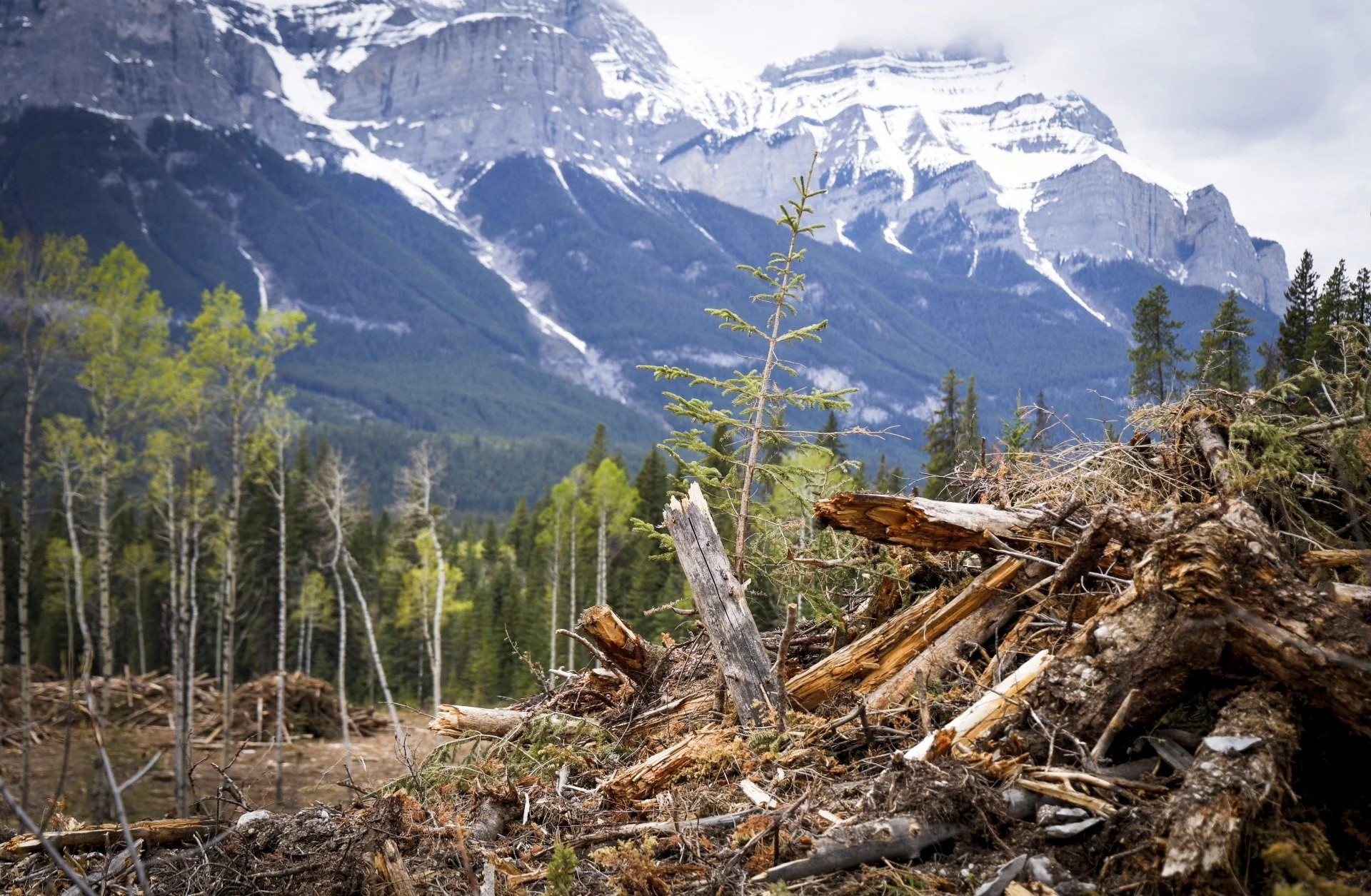
A slash pile is pictured in a newly constructed firebreak near Canmore, Alta., on May 15, 2025. File photo by: Jeff McIntosh / The Canadian Press
By Jennifer Cole
For years, Kyle Gillich watched the same cycle at Sun Peaks Mountain Resort Municipality in BC’s interior: every year, forestry crews would head into the forests surrounding the municipality to help mitigate wildfire risk. The forests would be thinned of underbrush, fallen branches and dead trees, leaving mounds of debris in towering bonfire piles, to be burned in the fall when the weather was cooler and wetter.
However, as summers get longer and hotter, the legal window for burning that debris has narrowed. Burn piles, according to Sun Peaks Fire Chief Dan Schiavon, can sometimes sit in the woods for more than a year. The material dries out and, instead of deterring wildfires, contributes to them. In 2022, a fire escaped a burn pile in Sun Peaks, scorching a hectare of forest.
Gillich, a wildfire risk management planner with Forsite Consultants Ltd., has been working with Sun Peaks on a new way to manage the thinned-out debris — one that both benefits the forest and mitigates wildfire risk to the community.
Convincing everyone, though, that spreading flammable material across the forest floor is a good idea is not always easy.
Keeping the soil moist
The process known as mastication (“chewing”) is used throughout North America to improve forest health. Rotating drums with cutting teeth are attached to the front of large excavators to shred small trees, underbrush and dead sticks and branches. The shredded material is left on the ground as a mulch.
This reporting is produced with support from I-SEA’s Climate Solutions project and is not behind National Observer’s subscriber paywall. Readers are asked to create a FREE National Observer account to access the full article.
Climate Solutions
- September 2026 1
- August 2026 1
- July 2026 1
- March 2026 2
- February 2026 3
- January 2026 1
- December 2025 5
- November 2025 3
- October 2025 1
- September 2025 5
- August 2025 2
- November 2024 1
- July 2024 4
- June 2024 2
- January 2024 1
- December 2023 2
- August 2023 5
- June 2023 1
- May 2023 1
- April 2023 1
- March 2023 3
- February 2023 3
- December 2022 5
Youth Climate Action
- September 2026 2
- August 2026 1
- July 2026 3
- June 2026 3
- May 2026 2
- April 2026 3
- March 2026 5
- February 2026 3
- January 2026 2
- December 2025 4
- November 2025 1
- October 2025 5
- September 2025 3
- August 2025 2
- July 2025 3
- June 2025 1
- May 2025 2
- April 2025 3
- March 2025 2
- February 2025 2
- January 2025 2
- December 2024 1
- November 2024 1
- October 2024 2
- August 2024 1
- July 2024 4
- June 2024 1
- May 2024 2
- April 2024 4
- March 2024 1
- February 2024 3
- January 2024 4
- December 2023 1
- November 2023 3
- October 2023 3
- September 2023 1
- April 2023 1
- February 2023 2
- January 2023 2
- December 2022 1
- November 2022 4
- September 2022 3
- August 2022 3
- April 2022 1
Toxins in Canada
First Nations Forward
Sustainable Cities
Canada's Clean Economy
- August 2022 1
- December 2020 1
- November 2020 3
- September 2020 1
- August 2020 1
- June 2020 1
- May 2020 4
- February 2020 1
- December 2019 3
- November 2019 5
- October 2019 2
- August 2019 2
- July 2019 1
- June 2019 1
- May 2019 2
- April 2019 1
- March 2019 2
- February 2019 2
- December 2018 1
- February 2018 1
- November 2017 1