

Indigenous riders try out free transit, EV use in Vancouver project
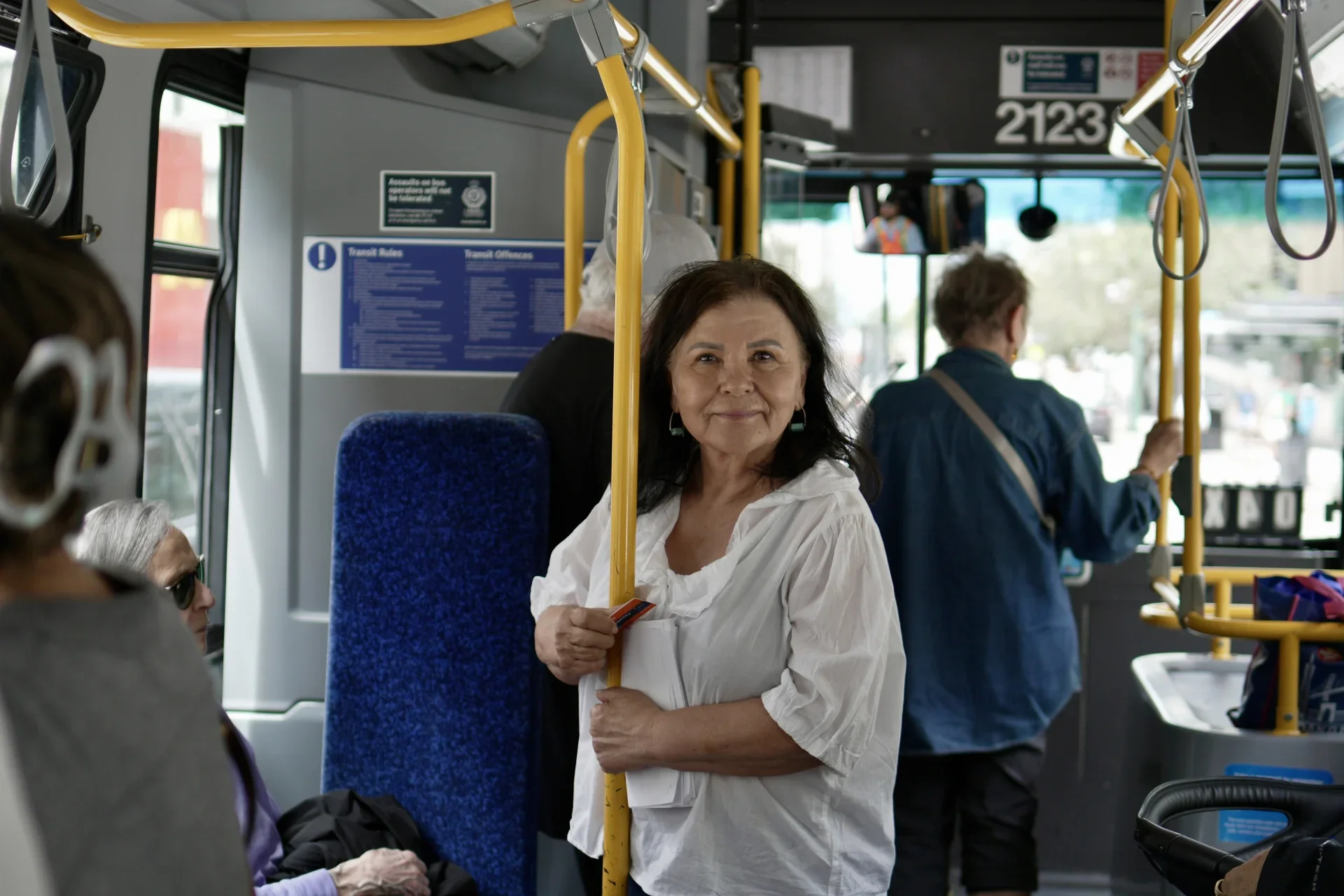
Lana Putnam rides a bus operated by TransLink, Metro Vancouver’s transit agency, in downtown Vancouver on July 9, 2026. Photo by: Sonal Gupta / Canada's National Observer
By Sonal Gupta
Lana Putnam was already doing something that made her feel small: climbing onto a Vancouver bus without fare money and hoping to get where she was going before anyone noticed. Then she tripped.
Putnam, a 70-year-old Cree Elder, was carrying her belongings when she fell in front of the other passengers. She wasn’t helped up; she was scolded. “Some of the people were saying, ‘Everybody pays,’” she said. “Instead of being worried about my fall.”
Putnam’s experience is what a new clean-mobility pilot program in Vancouver is trying to address: how to make everyday travel more affordable and usable for lower-income urban Indigenous residents in one of Canada’s most expensive cities while also cutting transportation emissions.
In Metro Vancouver, a single fare covers 90 minutes of travel after a rider taps in. Longer trips can mean paying again and anyone without valid proof of payment can face a $173 fine.
Putnam now carries a free Compass card through the pilot program, which gives 50 residents in her BC Indigenous Housing Society building six months of free public transit.
Putnam found out about the card through a program worker who regularly comes to the building with coffee and Timbits, sets up in the common area and talks with tenants as they pass through. Since the cards arrived, she has noticed mothers with children, older women and other neighbours using the bus more easily.
“I notice a lot of people are happier,” she said.
This reporting is produced with support from I-SEA’s Climate Solutions project and is not behind National Observer’s subscriber paywall. Readers are asked to create a FREE National Observer account to access the full article.