
Indigenous nations plan customs-free trade corridor across Canada-US border
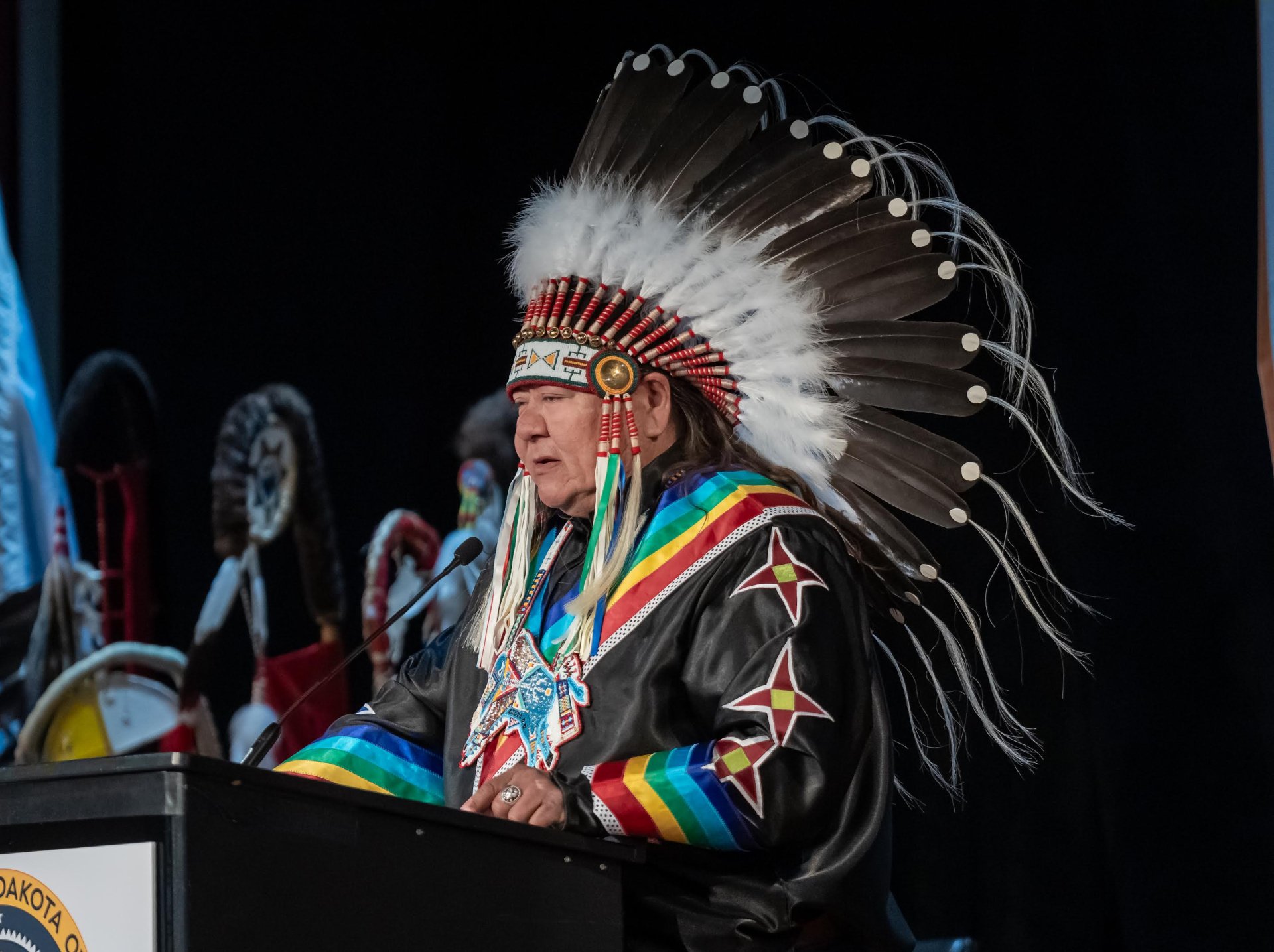
Rodger Redman, chief of Standing Buffalo Dakota Nation, leading the Indigenous Economic Corridors initiative. Photo courtesy: Solomon Cyr.
By Sonal Gupta
Just west of Fort Qu’Appelle in Saskatchewan, the Standing Buffalo Dakota Nation is working across the US border to revive centuries-old trade routes as part of a new Indigenous-governed trade corridor.
Trucks from the First Nation could soon be transporting food, furniture and even critical minerals south of the border along ancestral pathways once used to move buffalo hides and pemmican across the Plains — without paying taxes or tariffs.
For generations, Indigenous peoples freely exchanged goods, knowledge and culture across the land that is now divided by the Canada–US border. Those networks were disrupted by colonial laws that divided families and communities but they are now being reimagined as a modern supply chain grounded in Indigenous law and sovereignty.
“We’re operationalizing our old corridors — taking ancient trade routes our elders told us about and articulating them in a modern context,” said Solomon Cyr, spokesperson for Standing Buffalo Dakota Nation.
The First Nation plans to formalize its partnership with the Fort Peck Sioux Tribes, in Montana, next week by signing a memorandum of understanding to advance the trade corridor and its infrastructure development.
The corridor intends to use traditional routes traversing Dakota territories in Saskatchewan, Alberta, Manitoba and into the United States, reviving the historic Oceti Sakowin trade network, a historic alliance of seven Dakota, Lakota and Nakota Indigenous groups united by kinship, language and spiritual beliefs. The shared trade routes historically facilitated economic and military ties across their territories. “We have a lot of history, and even to this day, ties linking us to our relatives,” said Rodger Redman, chief of the nation.
Redman said this corridor is not symbolic, but rather an economic engine for the countries. Standing Buffalo is located in a region rich with critical minerals vital to global industries including renewable energy and technology. By owning the corridor, Indigenous nations can control the movement of these resources and expand economic opportunities for their communities.
This reporting is produced with support from I-SEA’s Climate Solutions project and is not behind National Observer’s subscriber paywall. Readers are asked to create a free National Observer account to access the full article.