
Summer program trains young people to tackle water crises
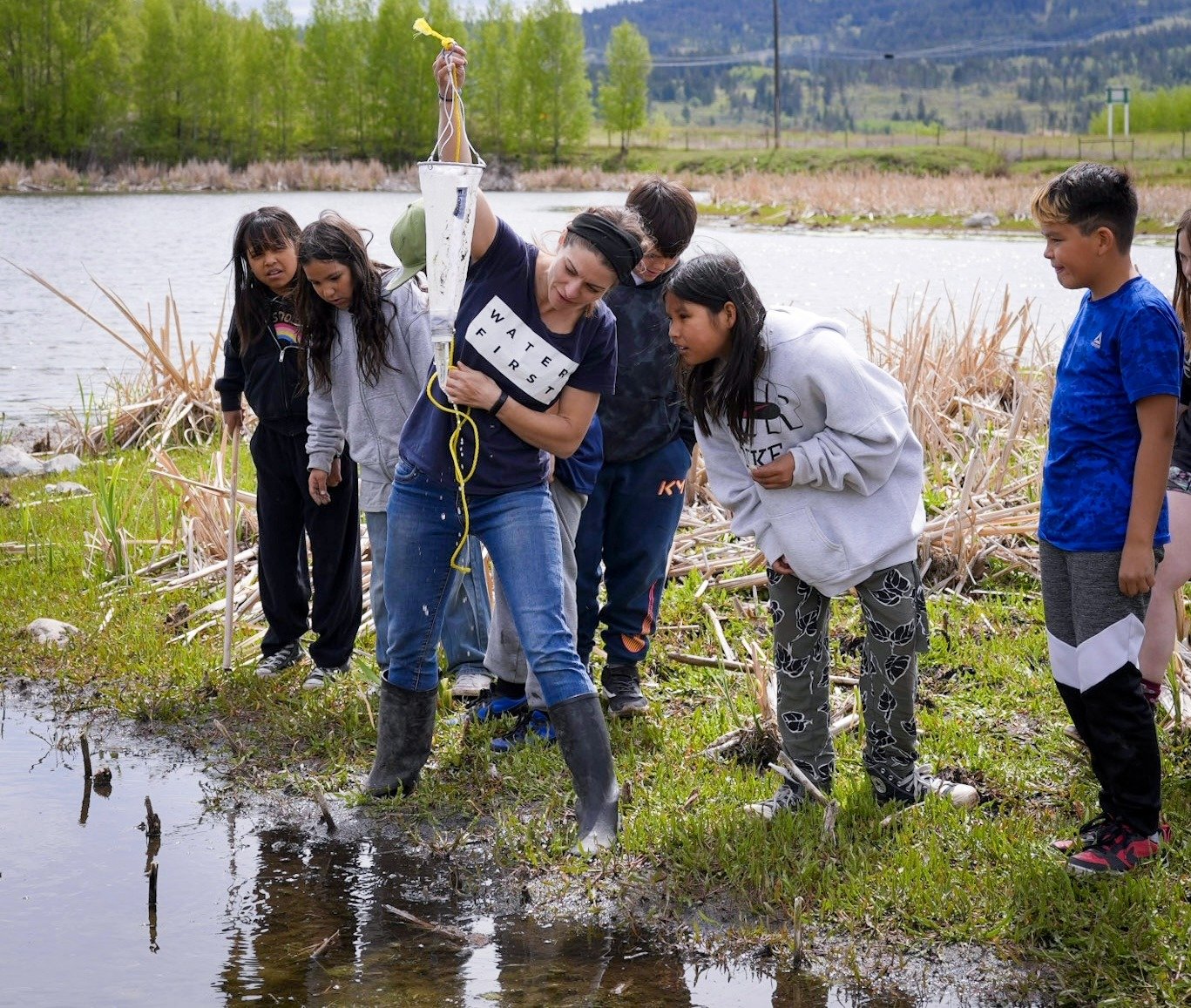
Water First’s national initiative is delivering water science programs annually, empowering Indigenous students K-12 with local knowledge and career pathways, while strengthening Indigenous leadership in water stewardship across Canada. Photo submitted by Water First
By Sonal Gupta
On a summer morning beside a flowing stream on Christian Island in southern Georgian Bay, Ontario, high school students bend low to scoop water and peer into its depths.
Equipped with scientific tools and curiosity, their tasks are prosaic: they test the water’s quality, search for aquatic insects and map their local watershed. But their work is also revolutionary. These Indigenous youth are training to become the next generation of water protectors for their community on Beausoleil First Nation.
Now in its fifth year, the reserve’s summer program brings students together for several weeks of immersive learning in water science and environmental studies.
Federal records obtained by Canada’s National Observer through an Access to Information and Privacy request show Canada has invested more than $7.1 billion since 2015 in building and repairing water and wastewater infrastructure on reserves. But First Nations across the country face persistent water quality problems, many of which are due to a lack of qualified operators.
Young children investigate aquatic life in a wetland as part of Water First’s school water science program for Indigenous communities. Photo submitted by Water First
Many Indigenous youth across the country have grown up with water issues “as part of their daily lives,” said Dillon Koopmans, who led the program as senior manager of education at Water First. Their research shows that 18 per cent of First Nations across Canada — and 32 per cent of those in Ontario — are currently under a drinking water advisory.
Though communities including Wasauksing First Nation in Ontario, where Kory Snache is a land-based educator, currently have reliable water infrastructure, he said many nearby Indigenous communities continue to experience instability in water quality and boil water advisories. Over time, this has become normalized, so younger community members may not fully grasp the severity of the crisis.
This reporting is produced with support from I-SEA’s Climate Solutions project and is not behind National Observer’s subscriber paywall. Readers are asked to create a FREE National Observer account to access the full article.