
Vet student teaches youth how climate change impacts wildlife and human health
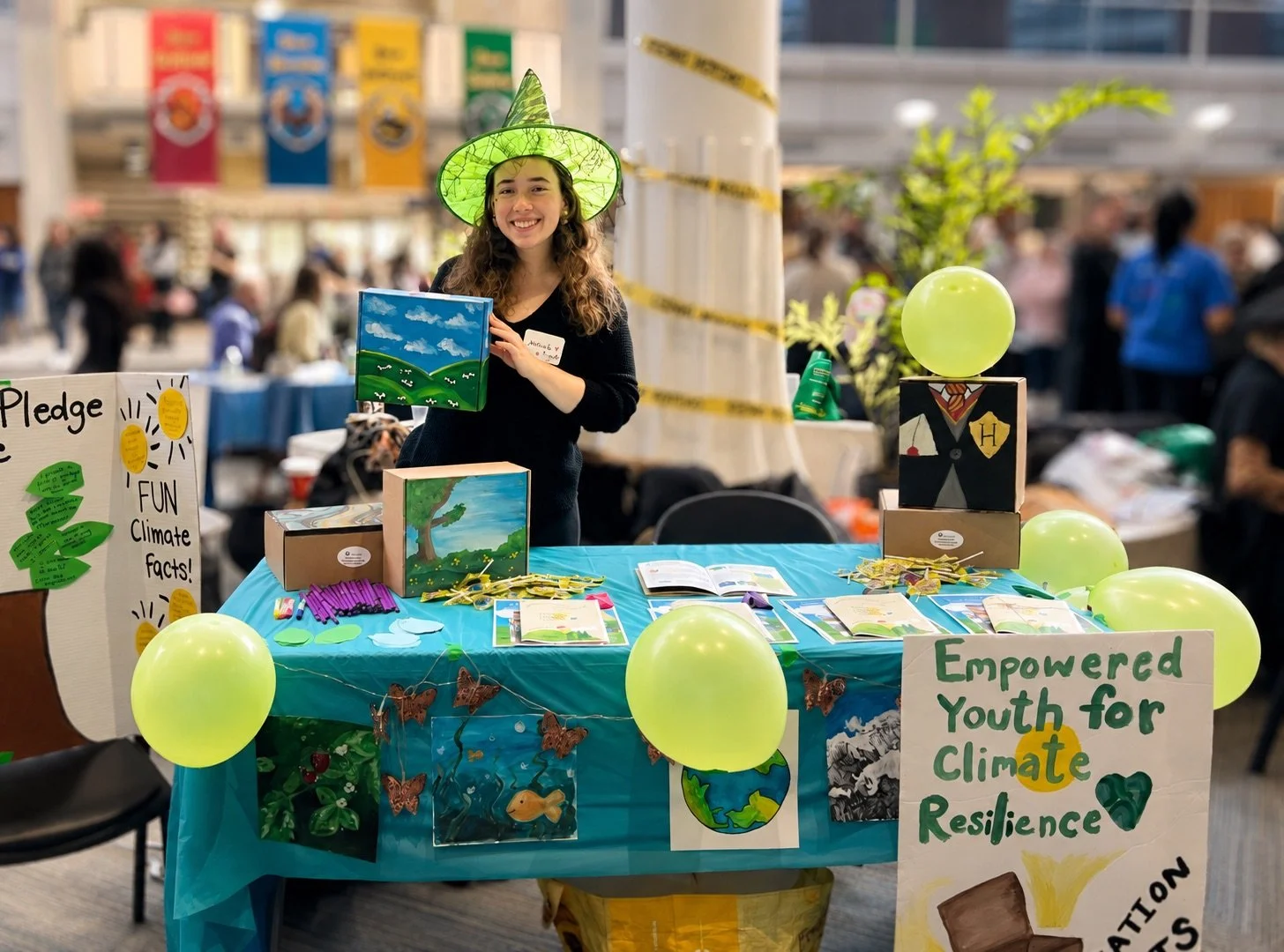
Mikayla Astroff distributing climate education toolkits at a Let’s Talk Science STEM event for children. Photo submitted by Mikayla Astroff
By Patricia Lane & Mikayla Astroff
Veterinary medicine student Mikayla Astroff earned a Starfish Canada 2026 Climate 75 Fellowship for her work helping youth understand the impacts of climate change on our ecosystems. This 23-year-old combines her interest in wildlife health and zoonotic disease with her climate advocacy.
Tell us about your interests.
Understanding how global warming is changing the health of our ecosystems requires us to understand both wildlife and human health. For example, as temperatures rise, the habitat for white-footed mice that host the ticks that carry Lyme disease is expanding northward. This shift causes a range of changes in ecosystem dynamics, affecting host species and raising public health concerns for humans.
I am interested in spotting the signs of zoonotic spread to alert decision-makers so they can safeguard the health of humans, ecosystems and animal communities at large. While I don’t know what exactly a job in this field will look like for me, I’m curious to keep exploring it.
How did you get interested?
I participated in a University of Guelph summer field school course in Madagascar, exploring some of the ecosystem and social dynamics behind why lemurs are disappearing. Lemurs and humans facing economic hardship share the same forest. Slash-and-burn farming is a culturally important livelihood strategy that also poses a risk to lemur habitat. Working in this space must be integrated with community leadership, as well as culturally appropriate veterinary and conservation science. This ‘One Health’ approach appeals to me because it looks at human, animal and ecosystem health holistically.
READ MORE Free to read — no sign-in required.
Youth Climate Action
- September 2026 2
- August 2026 1
- July 2026 3
- June 2026 3
- May 2026 2
- April 2026 3
- March 2026 5
- February 2026 3
- January 2026 2
- December 2025 4
- November 2025 1
- October 2025 5
- September 2025 3
- August 2025 2
- July 2025 3
- June 2025 1
- May 2025 2
- April 2025 3
- March 2025 2
- February 2025 2
- January 2025 2
- December 2024 1
- November 2024 1
- October 2024 2
- August 2024 1
- July 2024 4
- June 2024 1
- May 2024 2
- April 2024 4
- March 2024 1
- February 2024 3
- January 2024 4
- December 2023 1
- November 2023 3
- October 2023 3
- September 2023 1
- April 2023 1
- February 2023 2
- January 2023 2
- December 2022 1
- November 2022 4
- September 2022 3
- August 2022 3
- April 2022 1