

BC youth builds community power to drive environmental change
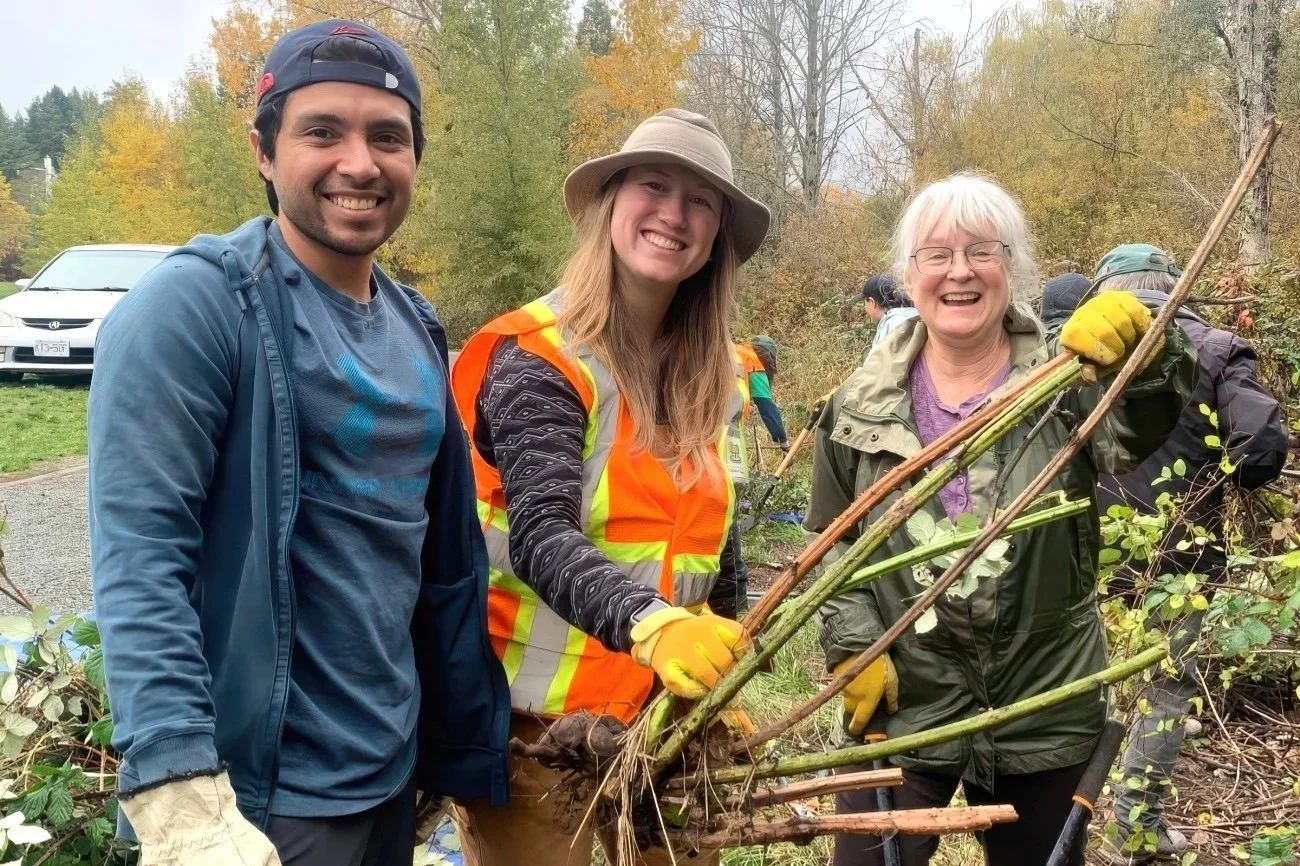
Ashton Kerr and Greater Victoria Green Team participants after pulling out a large invasive blackberry root in Colwood. Photo supplied by Ashton Kerr
By Patricia Lane & Ashton Kerr
Ashton Kerr connects and empowers people to take action for the environment. As acting director of partnerships and programs for Green Teams Canada, this 28-year-old North Vancouver resident shares the power and value of community organizing to create meaningful change.
Tell us about your project.
Many people care about climate change but don’t know where to start. Green Teams of Canada (GTC) exists to change that.
GTC connects people to community and nature to improve well-being and inspire environmental action. Through habitat restoration and litter cleanups, we create tangible ways to care for local places.
Climate change isn’t just an environmental issue, it’s a human one. What sets us apart is our focus on people. We design inclusive experiences where participants, often for the first time, feel they belong and leave empowered to act.
Our success in British Columbia’s Lower Mainland and Greater Victoria is a proven blueprint for social and environmental impact. Professional community organizing can engage thousands, build local resilience, and strengthen human connection. With investment, we’re ready to scale this model nationally.
How did you get into this work?
I didn’t always know I’d work in the environmental field. Studying environmental science at UBC, I realized the challenge wasn’t a lack of research on environmental issues, but helping people know what to do with it.
READ MORE Free to read — no sign-in required.
Youth Climate Action
- September 2026 2
- August 2026 1
- July 2026 3
- June 2026 3
- May 2026 2
- April 2026 3
- March 2026 5
- February 2026 3
- January 2026 2
- December 2025 4
- November 2025 1
- October 2025 5
- September 2025 3
- August 2025 2
- July 2025 3
- June 2025 1
- May 2025 2
- April 2025 3
- March 2025 2
- February 2025 2
- January 2025 2
- December 2024 1
- November 2024 1
- October 2024 2
- August 2024 1
- July 2024 4
- June 2024 1
- May 2024 2
- April 2024 4
- March 2024 1
- February 2024 3
- January 2024 4
- December 2023 1
- November 2023 3
- October 2023 3
- September 2023 1
- April 2023 1
- February 2023 2
- January 2023 2
- December 2022 1
- November 2022 4
- September 2022 3
- August 2022 3
- April 2022 1